The Design Universe of Hans Wegner


It's difficult to put the right adjectives around Danish designer Hans J. Wegner. One of the best terms that gets used, we think, is 'human' in his myriad attempts to seat the human form with considered, expertly crafted designs.
It's not as if he just designed one successful object and then perfected it over time – Hans Wegner occupies an enormous space in design history owing to his divergent and productive output. From the sleek Shell Chair to the hulking Ox Chair or the refined Wishbone Chair, with over seven decades of dedication to design and experimentation he traversed an extraordinary course of materials and aesthetic choices.
What's also impressive is the number of furniture makers who he partnered with and the string of other designers who employed him, including Arne Jacobsen. His work continues in production today with limited edition releases and adaptations to sustainable timbers, catering to new generations who appreciate and want to invest in his work.
We are pleased to present one of his influential designs, the Round Chair, famously once occupied by John F. Kennedy. Take a look through the examples of his work from our current and archive collection, along with a short biography.
For more information on this designer or any of his pieces, please contact us or visit the gallery.
.avif)
Hans Jørgensen Wegner (1914–2007) was one of the most influential furniture designers of the 20th century and a central figure in the Danish modern movement. Born in Tønder, Denmark, Wegner began his career as an apprentice cabinetmaker at the age of 14, a foundation that deeply shaped his lifelong commitment to craftsmanship, materials, and construction. This early training gave him an intimate understanding of wood, joinery, and form – qualities that would define his work.
After completing his apprenticeship, Wegner attended the Danish School of Arts and Crafts in Copenhagen, where he studied design while continuing to refine his technical skills. He later worked with prominent architects Arne Jacobsen and Erik Møller, contributing to significant projects such as Aarhus City Hall. However, it was in furniture design that Wegner found his true voice.
Wegner designed over 500 chairs throughout his career, many of which are now considered masterpieces. His most famous work, the Round Chair (1949), gained international recognition when it was used in the 1960 U.S. presidential debate between John F. Kennedy and Richard Nixon. Often referred to simply as “The Chair,” it exemplifies Wegner’s philosophy: simplicity, functionality, and a deep respect for materials.
.avif)
1949 / Hans Wegner 'CH24 - Wishbone' Dining Chairs by Carl Hansen & Søn. Archive Image.
.avif)
1963 / Detail of the CH07 'Shell' Chair by Carl Hansen & Son. Archive Image.
.avif)
1963 / CH07 'Shell' Chair by Carl Hansen & Son. Archive Image.
A defining characteristic of Wegner’s work is his ability to balance aesthetics and structure. He believed that a chair should be beautiful from every angle and that its construction should be honest and visible. Rather than hiding joints and connections, he celebrated them, turning functional elements into design features. His approach blended traditional craftsmanship with modernist principles, resulting in pieces that feel both timeless and contemporary.
Wegner was also known for reinterpreting historical furniture forms, particularly Chinese Ming dynasty chairs, which inspired several of his iconic designs. However, his work was never nostalgic; instead, he distilled these influences into clean, modern expressions.
Over his lifetime, Wegner received numerous awards, including the Lunning Prize and the Grand Prix at the Milan Triennale. His designs continue to be produced and are featured in museums and collections worldwide. Today, Hans J. Wegner is remembered not just as a designer, but as a master craftsman who elevated the chair into an art form – creating objects that embody clarity, comfort, and enduring beauty.

1954 / Hans Wegner 'GE-258' Sofa Daybed by Getama. Archive Image.

1957 / Hans Wegner 'RY-16' Cabinet by Ry Mobler. Archive Image.
.avif)
c. 1955 / Hans Wegner 'AT-312' Dining Table by Andreas Tuck. Archive Image.

1950s / Hans Wegner 'AT-10' Coffee Table by Andreas Tuck. Archive Image.
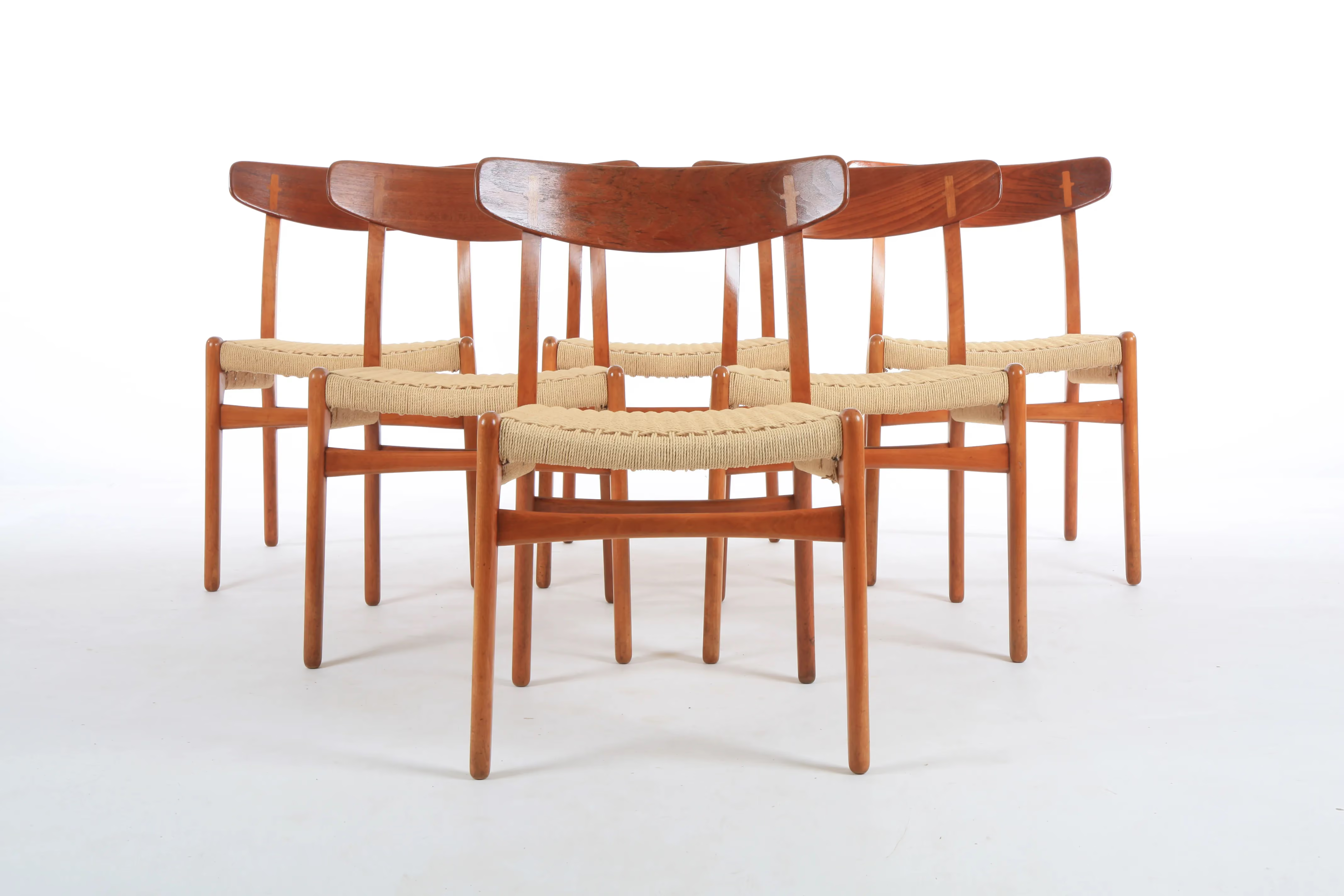
1950 / Hans Wegner Model CH23 chairs by Carl Hansen & Søn. Archive Image.
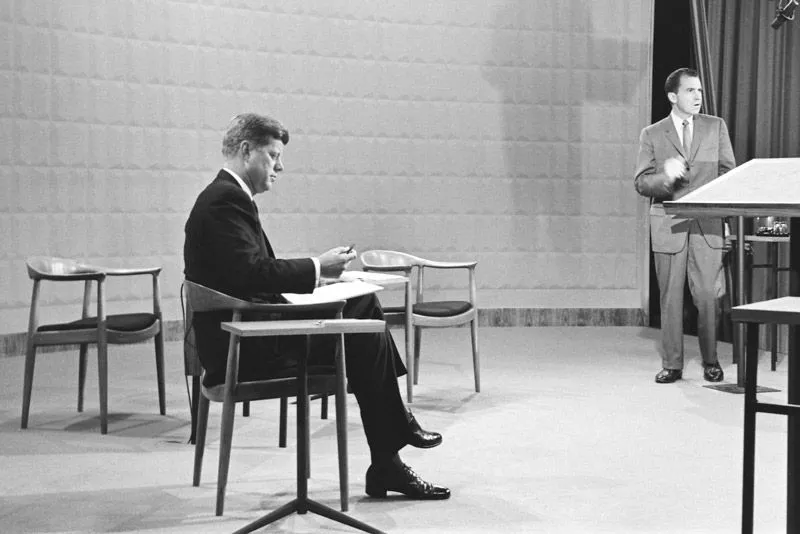
Then Senator John F. Kennedy seated on the JH503 Chair by Hans Wegner during the the first 1960 presidential debate with then Vice President Richard Nixon.
A chair is to have no backside. It should be beautiful from all sides and angles.

.avif)