Serious Play: Charles and Ray Eames in Materials and Form

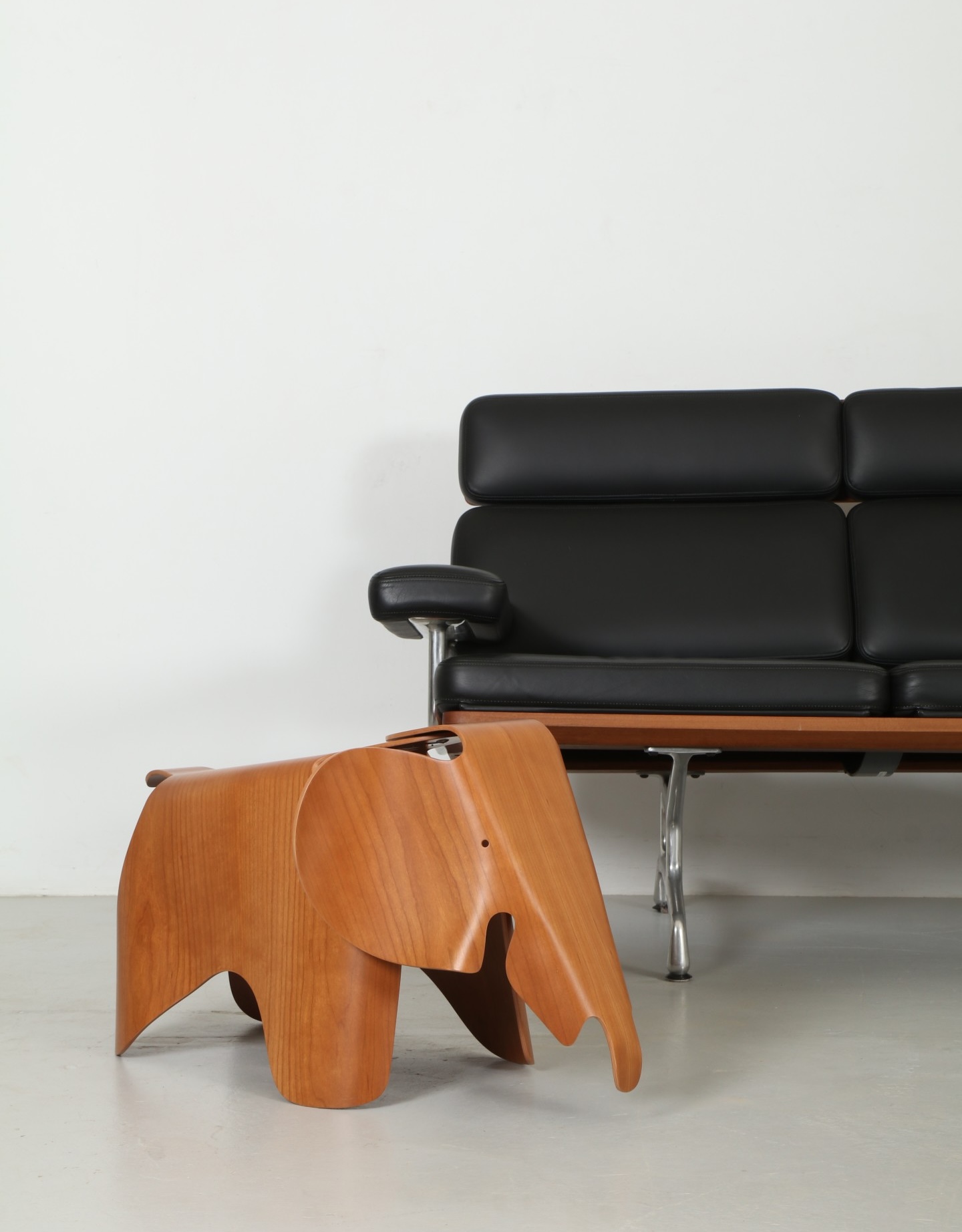
The Eames Plywood Elephant in American cherry, by Vitra. Design 1945; our example is a 2017 edition. Photograph: Mr Bigglesworthy.
There are two new elephants in the gallery, far away from African plains. One has a generous sweep of American cherry, broad ears and a trunk that curls towards the floor. The other is small enough to sit in the palm of your hand. Both make it remarkably difficult to walk past without smiling.
These particularly special arrivals have prompted us to look again at Charles and Ray Eames, through a group of pieces we have recently collected. Alongside the elephants are vintage fibreglass chairs, a beautifully tailored leather sofa and a boxed set of walnut spinning tops inspired by their work.
Together, they offer a fascinating view of the Eames world: the plywood experiments of the 1940s, the adaptable seating of the 1950s, a later chapter in the Eames Office, and an influence that continues to invite play. Follow the materials and you begin to see how much curiosity sits behind those familiar forms.

Our Vitra Miniature Plywood Elephant, a later reproduction of the 1945 design at one-sixth scale. Photograph: Mr. Bigglesworthy.
1945: a small animal, an ambitious experiment
The elephant emerged from Charles and Ray’s experiments in moulding plywood into three-dimensional forms. As Vitra’s account of the design explains, smaller objects and sculptures gave them ways to test the material alongside their developing chairs.
Look at the elephant from above and the technical ambition becomes apparent. Its rounded body and folded ears require wood to curve in several directions, yet the finished animal feels wonderfully uncomplicated. So much character comes from just a few decisions: the size of an ear, the opening between the legs, the angle of a trunk.
The original design dates to 1945, but it did not enter production during the Eameses’ lifetimes. Vitra released a limited edition in 2007, followed by the permanent plywood version in 2017. Our American cherry example belongs to that later chapter.
The miniature offers a different pleasure. At one-sixth scale, the same curves become something you can study closely, almost like an architectural model. Together, the two show how convincingly a carefully considered form can hold its character at very different sizes.
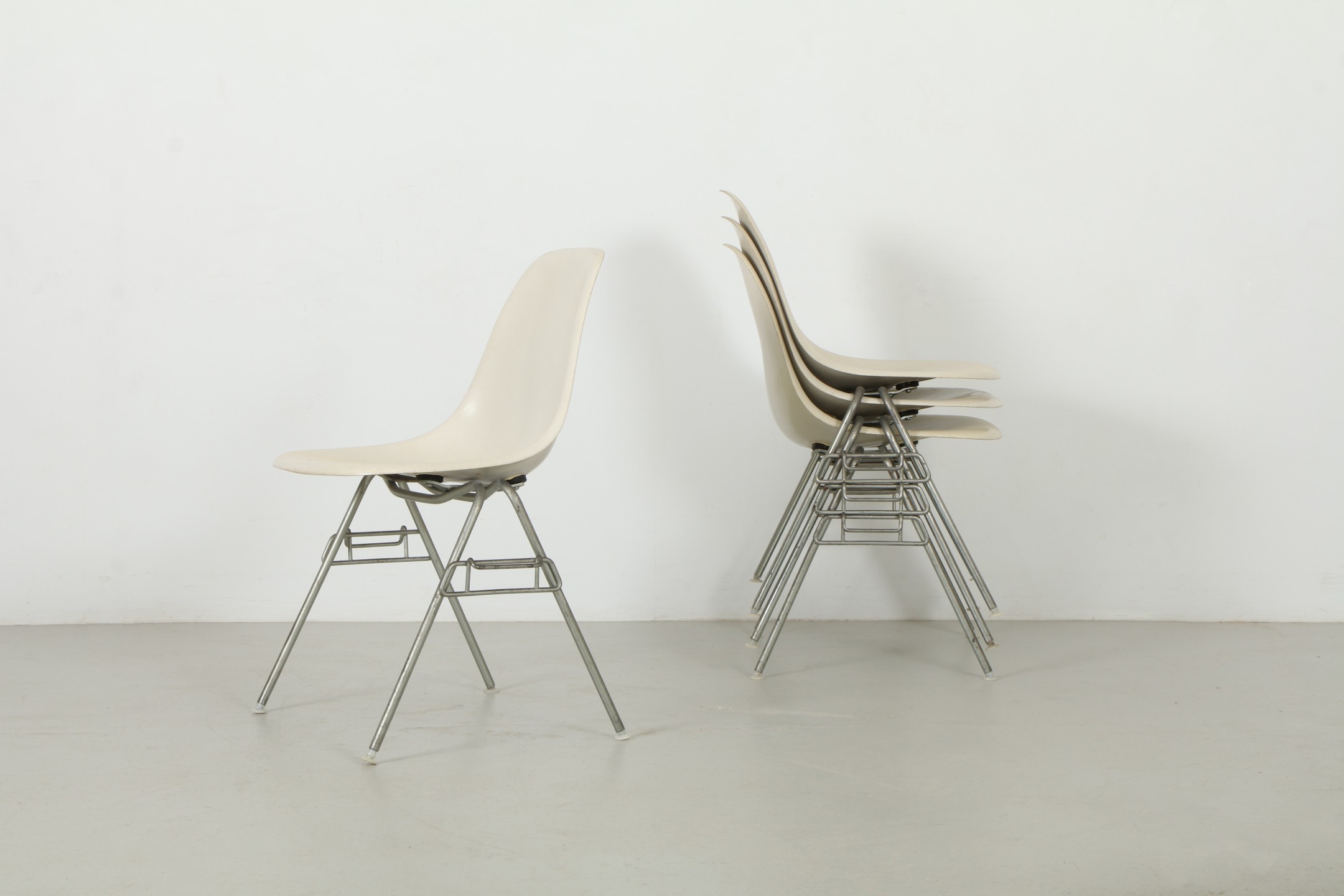
Four DSS Stacking Chairs by Charles and Ray Eames for Herman Miller. Photograph: Mr. Bigglesworthy

Vintage Herman Miller DSX chairs, circa 1959 editions. Their gently curved fibreglass shells sit above slender steel bases. Photograph: Mr. Bigglesworthy.
The 1950s: one shell, many possibilities
With fibreglass, the material conversation changed. The Eames shell-chair family, introduced by Herman Miller in 1950, developed the idea of a continuous seat and back into a remarkably versatile system.
Our latest arrivals let you see that thinking in action. The DSX chairs have an economical four-legged stance. The PSC swivel side chair places its shell on a pedestal base. The DSS stacking chairs bring another practical answer, with bases that allow the chairs to stack and connect in rows. Our DSX and PSC examples are dated circa 1959; the DSS set dates from around the 1960s.
Changing the base changes how the chair behaves, where it belongs and even how it looks. A single family of forms can serve a dining table, a desk or a room that needs to be cleared at the end of the day.
We particularly enjoy the surfaces of the vintage shells. Fine fibres are visible within the material, giving the pale colours depth and variation. The shape is precise, but there is still plenty for the eye to discover.
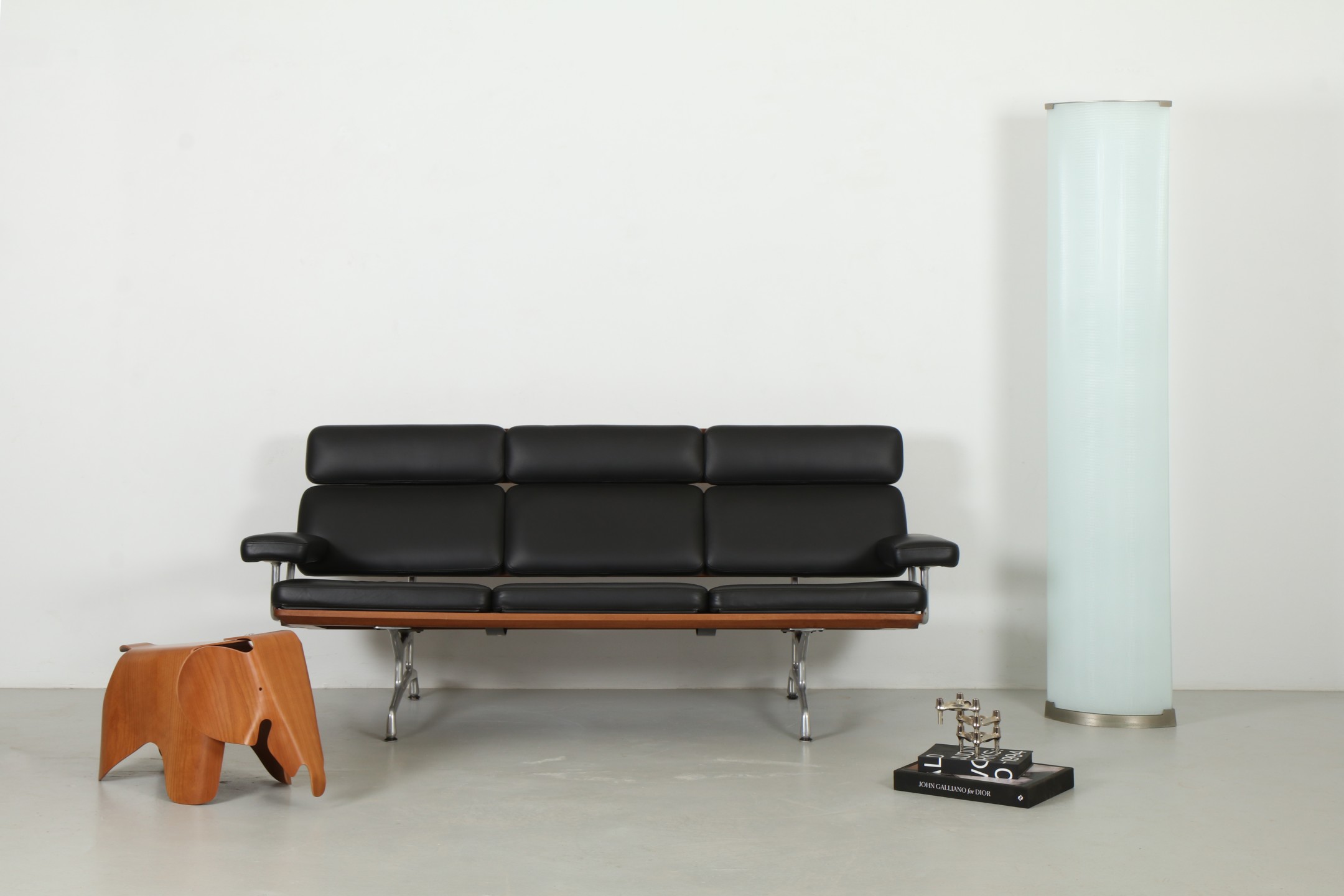
The ES108 Three-Seat Sofa by Herman Miller. First produced in 1984; our example is a later edition. Photograph: Mr. Bigglesworthy.
A later chapter: walnut, leather and aluminium
The ES108 sofa brings a more architectural character to the collection. Black leather cushions sit within a clear arrangement of walnut panels and polished aluminium. The timber has warmth, the metal gives the structure definition, and the upholstery softens the geometry.
This is a late Eames Office design with a particular history. According to Herman Miller, the office completed the design after Charles’s death in 1978, and production began in 1984. It was conceived to complement the Soft Pad chairs and the Eames chaise.
Seen beside the earlier shell chairs, the sofa demonstrates the breadth of their approach. The materials and proportions have changed, but the attention to how each part meets the next remains. Even the rear view has been carefully resolved. In a room where the sofa can stand away from the wall, those walnut panels become a particularly satisfying feature.
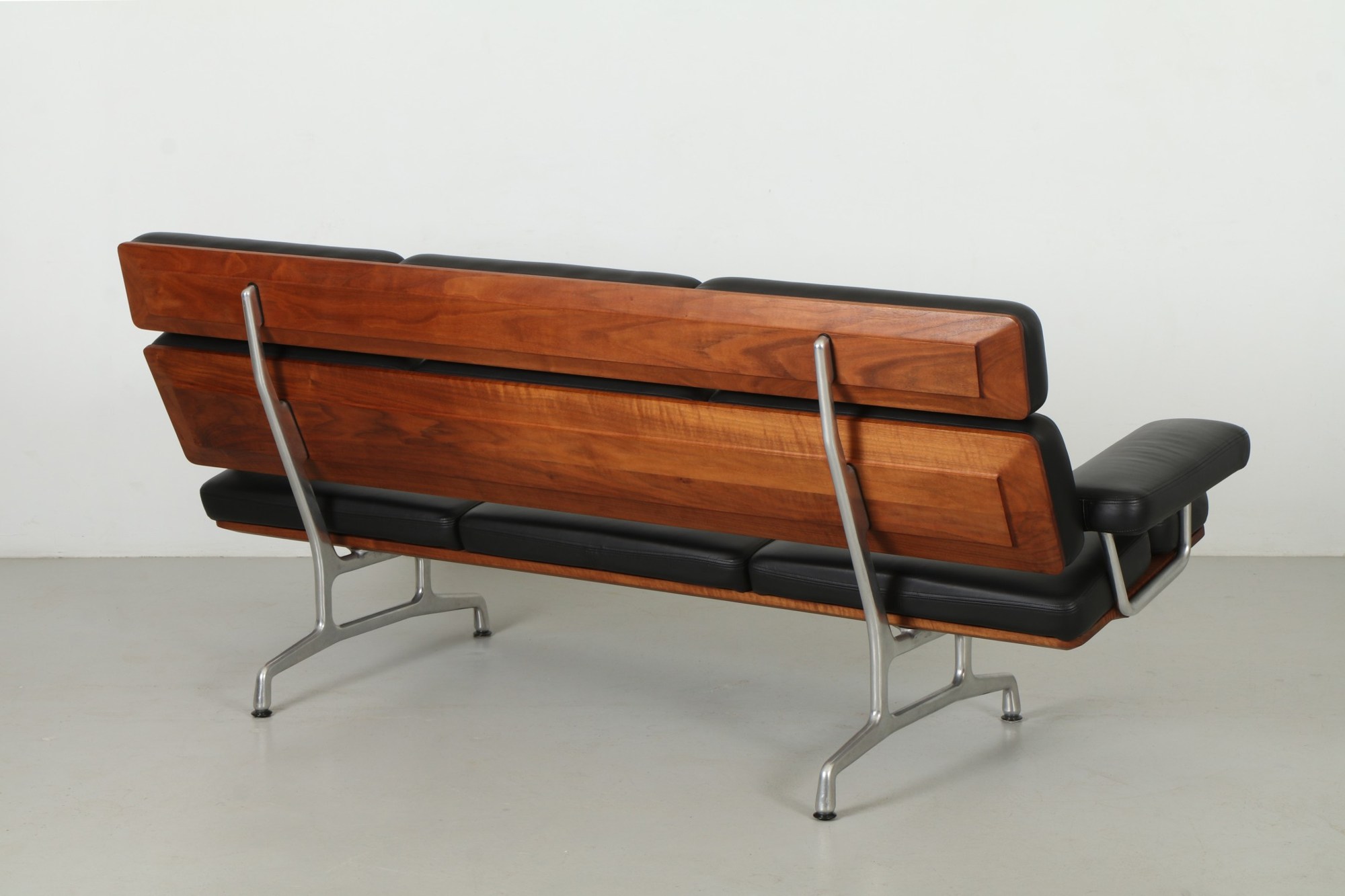
The ES108 rewards a walk around the back: walnut panels and aluminium supports make its construction part of the view. Photograph: Mr. Bigglesworthy.
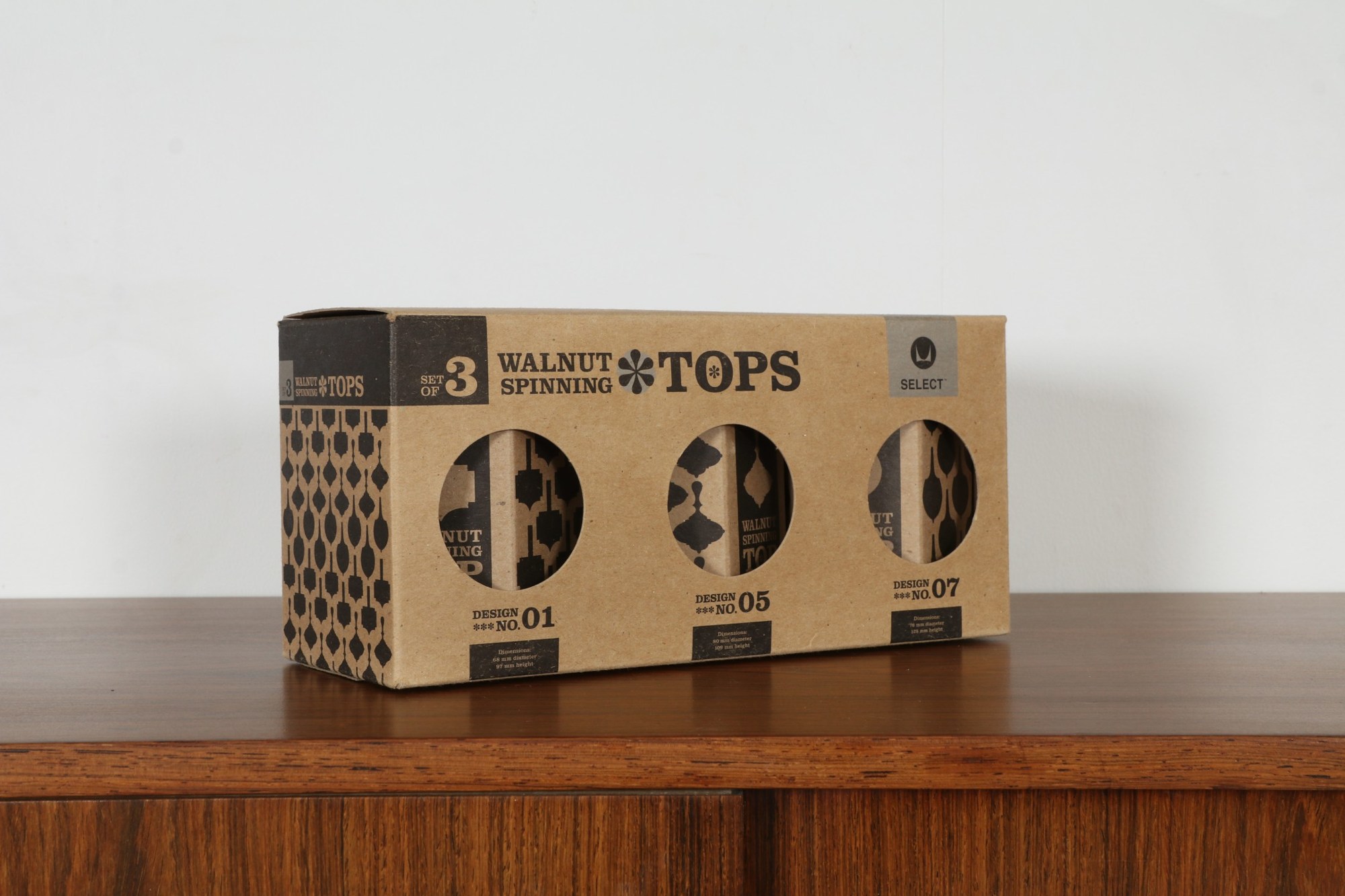
Herman Miller Select Walnut Spinning Tops, 2009. Designed by KleinReid in homage to Charles and Ray Eames; our set retains its original packaging. Photograph: Mr. Bigglesworthy.
Room for play
The smaller objects bring us back to the elephants, and to the Eameses’ pleasure in looking closely. Their 1969 film Tops turns spinning toys into a study of movement, rhythm and form, accompanied by music from Elmer Bernstein.
That fascination inspired the Herman Miller Select walnut tops in our collection. Released in 2009, the trio was designed by James Klein and David Reid of KleinReid as a tribute to Charles and Ray. Their turned profiles carry the story forward into solid timber, with silhouette and balance at the heart of the design.
The photograph of the Eames couple at home feels like a fitting companion. Furniture shares the room with plants, rugs and collected objects; there is room for curiosity everywhere.
That is what we enjoy about bringing these pieces together. A small elephant can reward attention just as much as a substantial sofa. A chair can be practical enough for everyday use and still reveal something new when you look underneath it. Across different materials and decades, the pleasure of discovery stays with the object.
Explore our Charles and Ray Eames collection, or visit us at 86 Newton Road, Eden Terrace, Auckland, to see these latest arrivals in person.
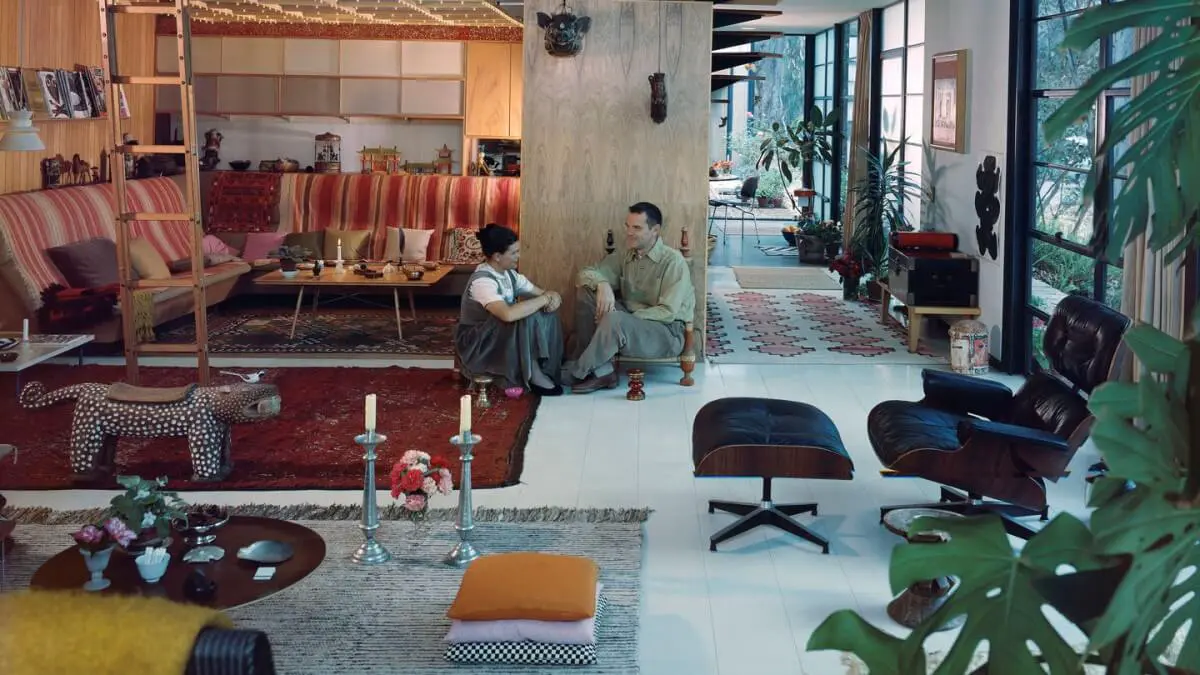
Charles and Ray at Case Study House No. 8, 1958. Photograph: Julius Shulman. From our Charles and Ray Eames designer archive.
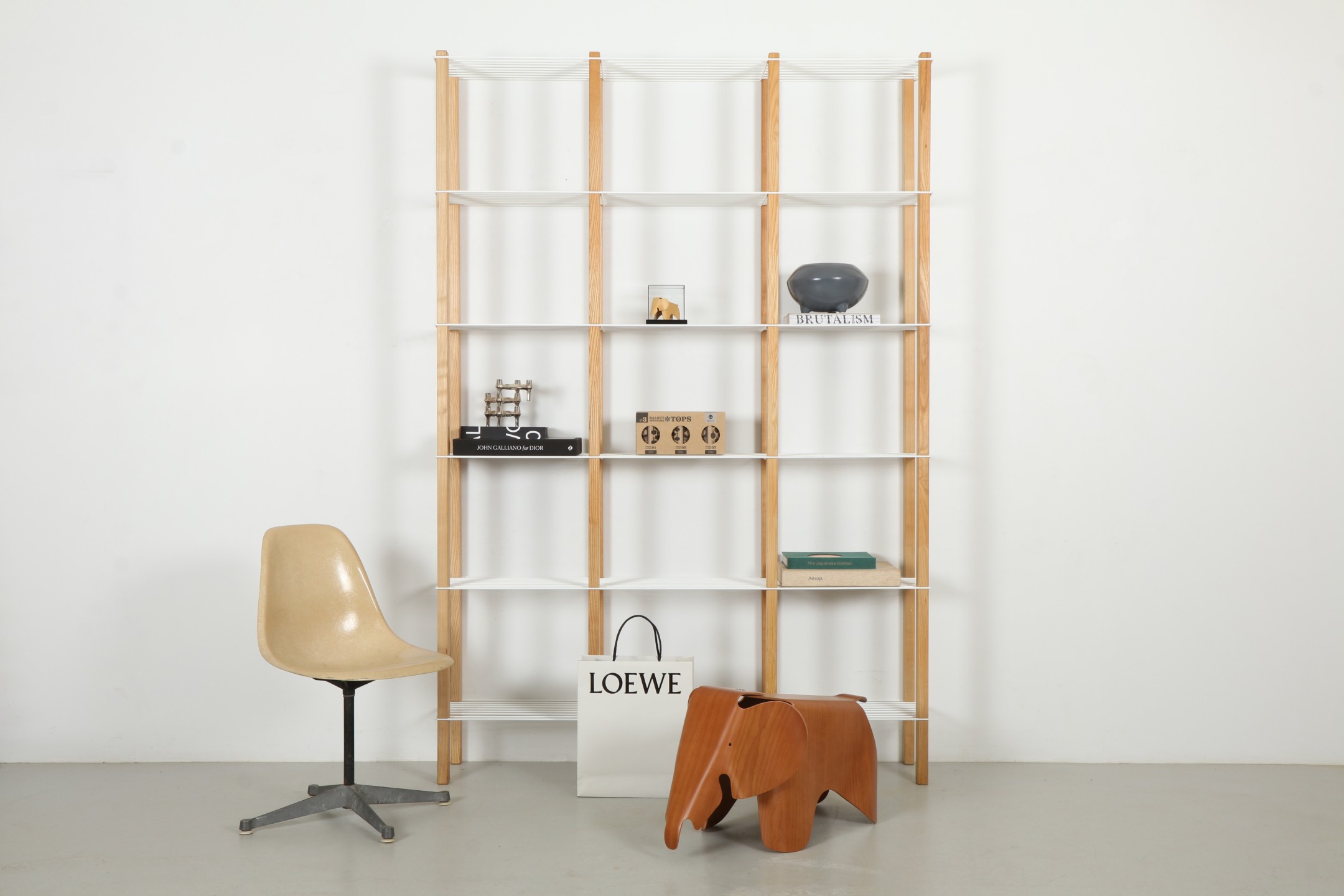
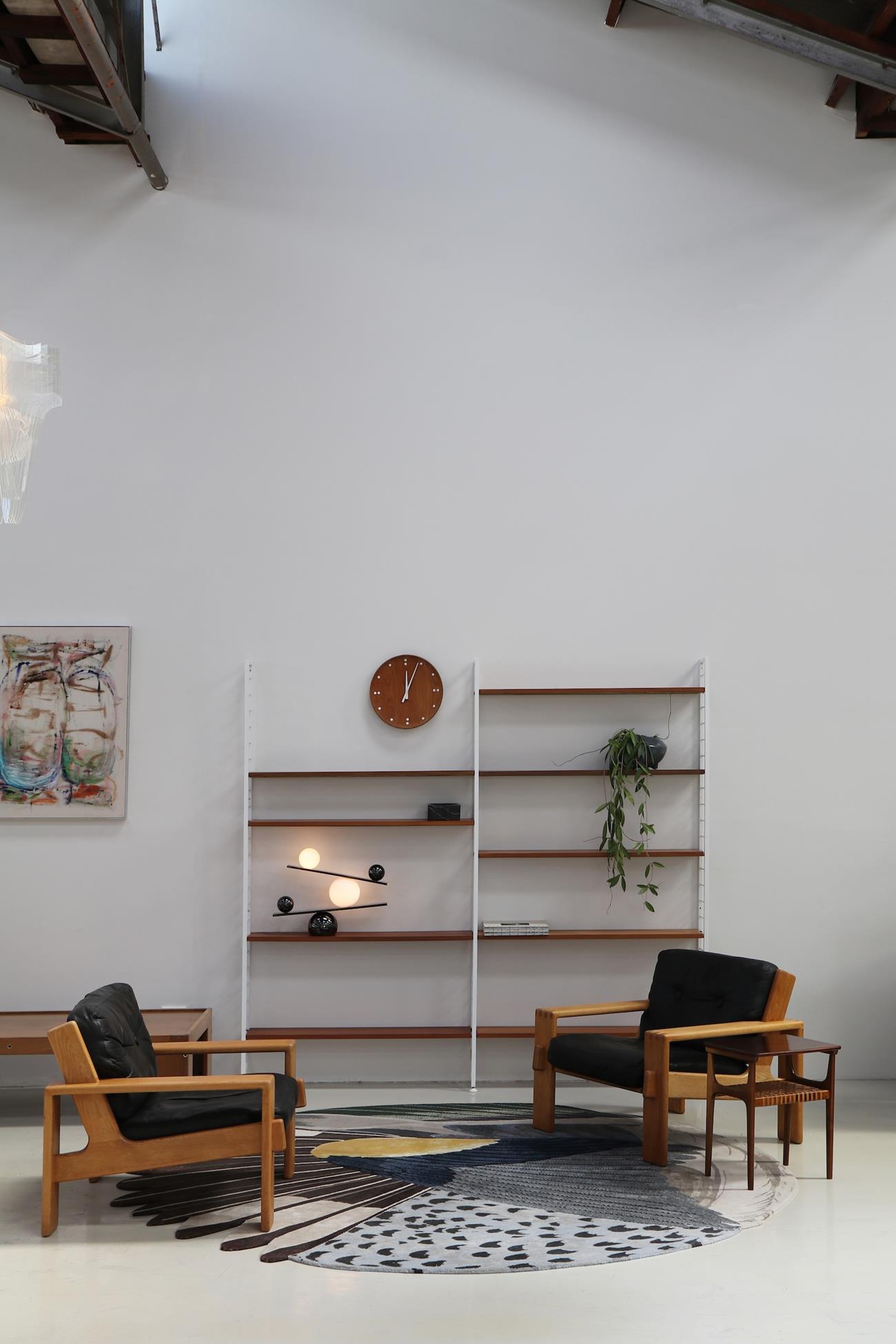
A collection of Eames furniture and objects shown with Historian Shelving by New Zealand designer Nathan Goldsworthy. Photograph: Mr. Bigglesworthy.