How to Identify High-Quality Mid-Century Modern Furniture: An Expert Buyer’s Guide


The Model 66 sideboard by Ib Kofod-Larsen for Faarup. Its restrained form brings the rosewood grain and carefully shaped details into focus. Image: Mr Bigglesworthy.
A beautiful silhouette might catch your attention, but the most revealing details are often inside a drawer, beneath a seat or on the back of a cabinet. Learning to look beyond the first impression helps you recognise furniture with lasting quality.
The short answer: identify high-quality mid-century modern furniture by examining its construction, materials, proportions, condition and documented maker. Compare labels and design details with reliable references. No single feature proves quality or authenticity: the strongest assessment comes from several pieces of evidence that agree.
At Mr Bigglesworthy, construction is an important part of what we select. Because we usually restore pieces before offering them for sale, we need to understand how they were made and whether careful work can achieve a lasting result. A recognisable name or Danish origin alone cannot answer that question.
What makes mid-century modern furniture valuable?
Quality describes how thoughtfully a piece is designed and made, but it does not determine market value on its own. Value also reflects the standing of the designer and maker, rarity, provenance, condition and demand. Understanding how these factors relate helps explain why equally well-made pieces can command very different prices.
When considering a price, compare genuinely similar examples, including their condition and production period. Completed sales are more informative than ambitious asking prices. For a piece you intend to live with, comfort, scale and usefulness deserve just as much attention.
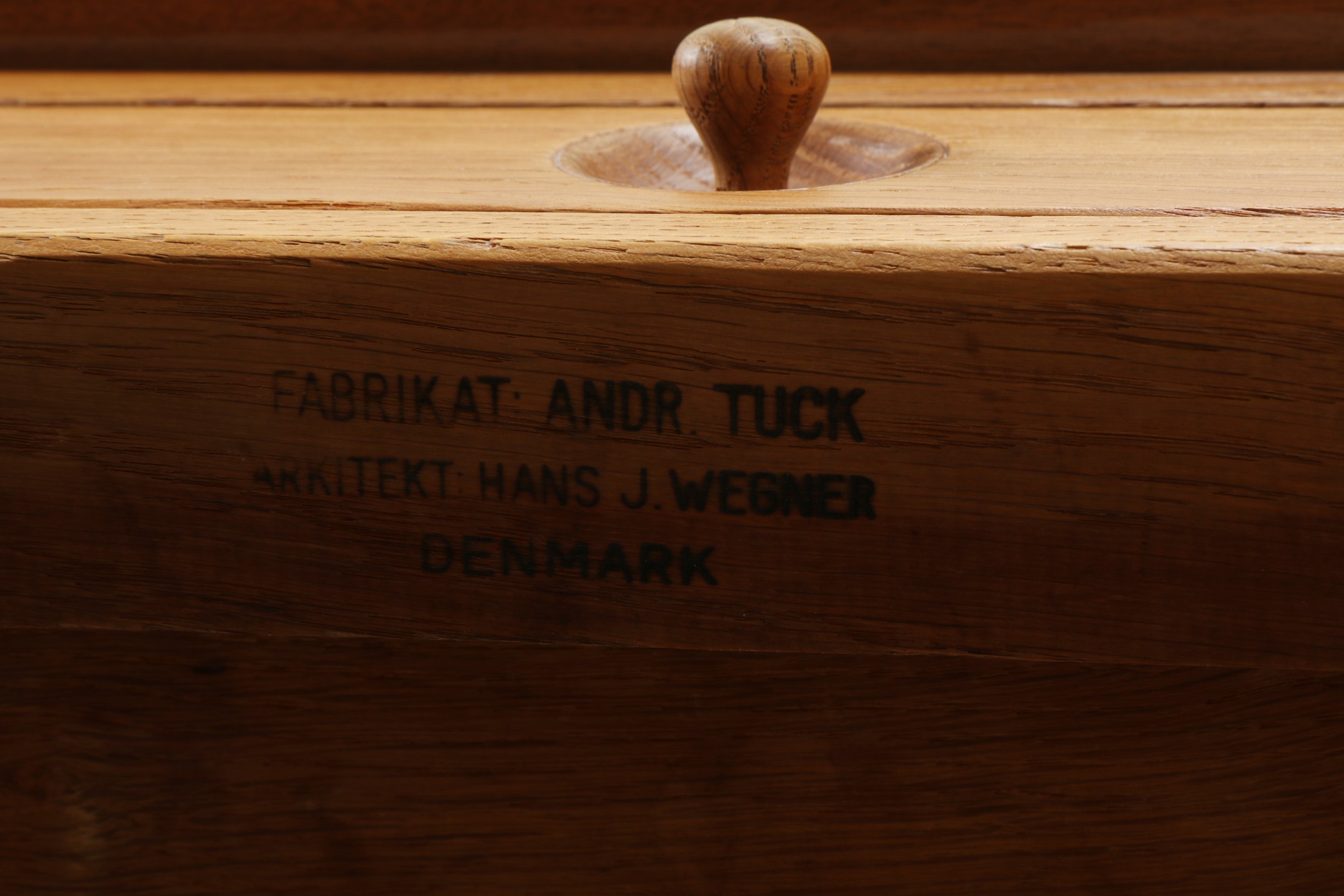
The maker’s stamp under the AT-305 desk names Andreas Tuck, Hans J. Wegner and Denmark. Marks are a starting point for research, to be checked against the furniture itself. Image: Mr Bigglesworthy.
Do labels and maker’s marks prove authenticity?
A maker’s mark provides a useful lead. Look beneath seats and tabletops, inside or underneath drawers, and on cabinet backs. It's the first place to start when researching the name, model or number.
Then check whether the dimensions, materials and construction match documented examples from the claimed period. Labels can disappear, components can be replaced, and marks can be copied. Their presence supports an attribution; their absence does not automatically disprove one.
Our restoration research draws on original product catalogues and design publications. This matters because an attribution repeated across sales listings is not the same as independent evidence. An unsupported designer attribution can inflate a piece’s perceived value, especially when repeated until it appears established.
Original vintage, authorised production or reproduction?
A design’s age and an individual piece’s age are different things. A chair designed in the 1950s may have been manufactured decades later. Authorised later production can be authentic without being an early vintage example.
For a recognised design, establish who made the particular piece and approximately when. Use the relevant manufacturer’s records alongside period references. Herman Miller’s Eames Lounge Chair guide, for example, provides details of its current construction and identification. Those details need historical context when assessing an older chair.
Phrases such as “in the style of” or “Eames era” describe a resemblance or period; they do not establish authorship. Ask the seller to explain the evidence behind a named attribution.
.avif)
Our reference library at the Good Form gallery. Original catalogues and design publications help establish context and check attribution. Image: Mr Bigglesworthy.
.JPG)
The Hans Wegner AT-305 desk by Andreas Tuck with both extension leaves raised. Assessing a piece also includes understanding how it functions in everyday use. Image: Mr Bigglesworthy.
What do construction and hardware reveal?
Start by looking at the whole piece. Do doors and drawers sit evenly? Are legs secure? Does the furniture feel stable when used normally? With the seller’s permission, open drawers, operate extensions and inspect the underside. Avoid forcing mechanisms or testing a visibly damaged chair by sitting on it.
Look for cleanly fitted joints, supported drawer bottoms and hardware appropriate to the design. The drawer detail pictured below on the AT-305 shows how much information a small component can provide. A dovetail is worth examining, but its presence alone proves neither age nor exceptional quality.
Dowels, screws, plywood and metal fittings all have legitimate uses in well-designed furniture. Assess how a construction method serves the piece. A mismatched screw may indicate a repair, rather than a reproduction; a heavy cabinet may owe its weight to its substrate, rather than superior workmanship.
Finally, use the furniture as intended. A beautifully shaped handle should feel comfortable, a drawer should move smoothly, and a chair should suit your body as well as your room.
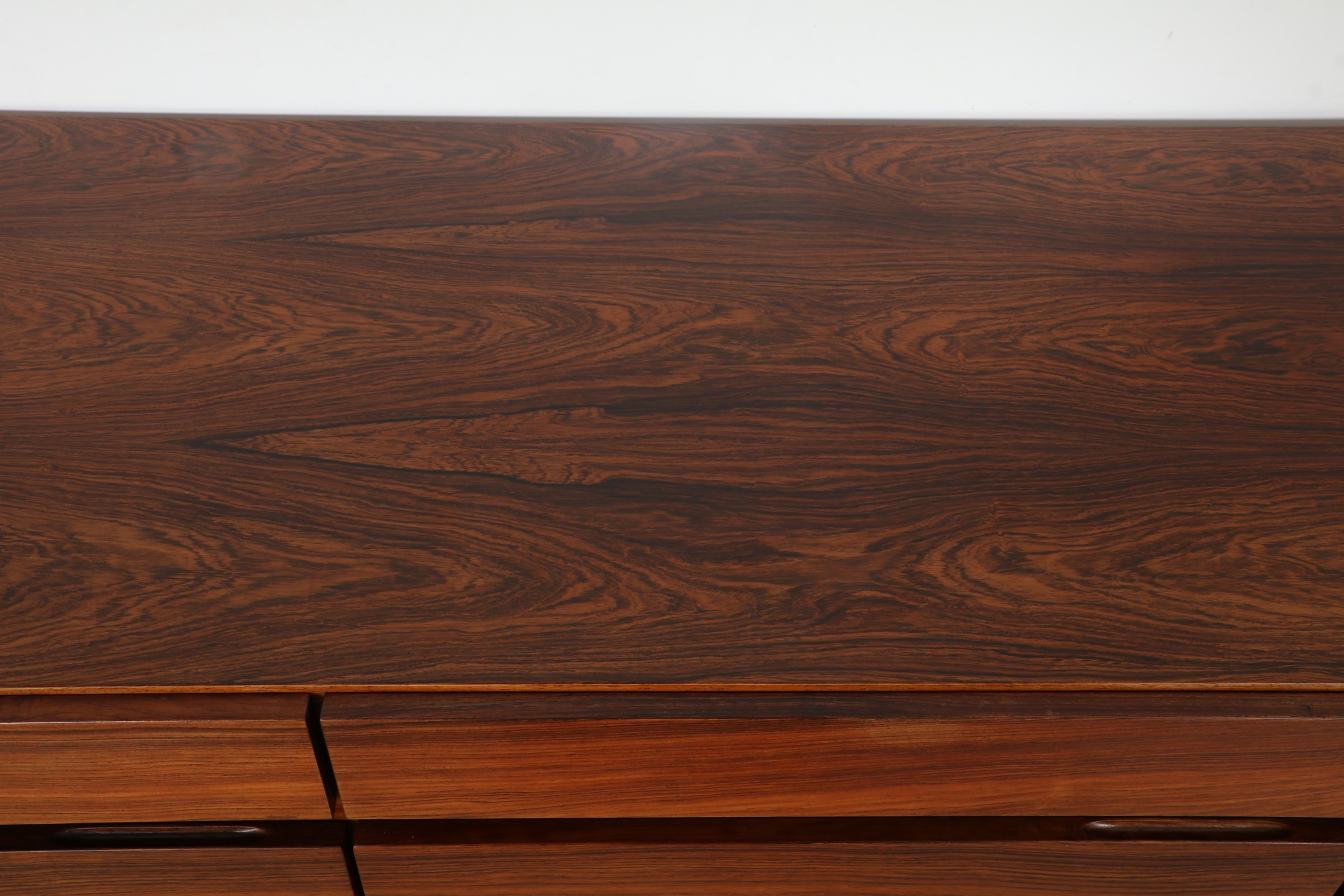
Rosewood grain on the Model 66 sideboard, which combines solid and veneered timber. Look at both the appearance of the surface and the condition of its edges. Image: Mr Bigglesworthy.
Is veneer a sign of poor-quality furniture?
No. Veneer is a thin layer of real timber applied to a substrate. It allows carefully selected grain to extend across broad surfaces and is an integral part of many fine cabinets and tables. The Model 66 sideboard pictured here combines solid and veneered rosewood; the AT-305 combines solid and veneered oak.
The useful question is how well the materials have been selected, combined and preserved. Inspect edges and corners for lifting, chips or evidence of sanding through the veneer. Repairs may be possible, but the location and extent of damage affect the work required.
Teak, rosewood, walnut and oak are associated with many mid-century designs, yet a timber species alone is not a quality guarantee. Nor is surface colour a reliable way to identify it: finishes, staining and exposure to light can alter its appearance.
Well-made furniture also exists in moulded plywood, metal and other materials. Understanding the intended construction is more useful than assuming that solid timber is always the best choice.
How should you assess condition and restoration?
Separate attractive signs of age from problems that affect use. Gentle surface wear can contribute character; loose joints, lifting veneer, failed upholstery support and poorly repaired breaks call for closer assessment.
Ask what has been done, who carried out the work and which parts were replaced. Restoration can devalue an item if it isn't done to a high standard or in a conservative manner. For a rare or particularly original example, seek specialist advice before making irreversible changes.
In our experience, the ability to care for and restore a piece is part of its long-term quality. We look for construction that allows a good outcome, rather than assuming every older piece can be brought back successfully. This is especially relevant when choosing something you hope to pass on: its future depends partly on how well it can be maintained.
Read more about our approach to restoring mid-century furniture.
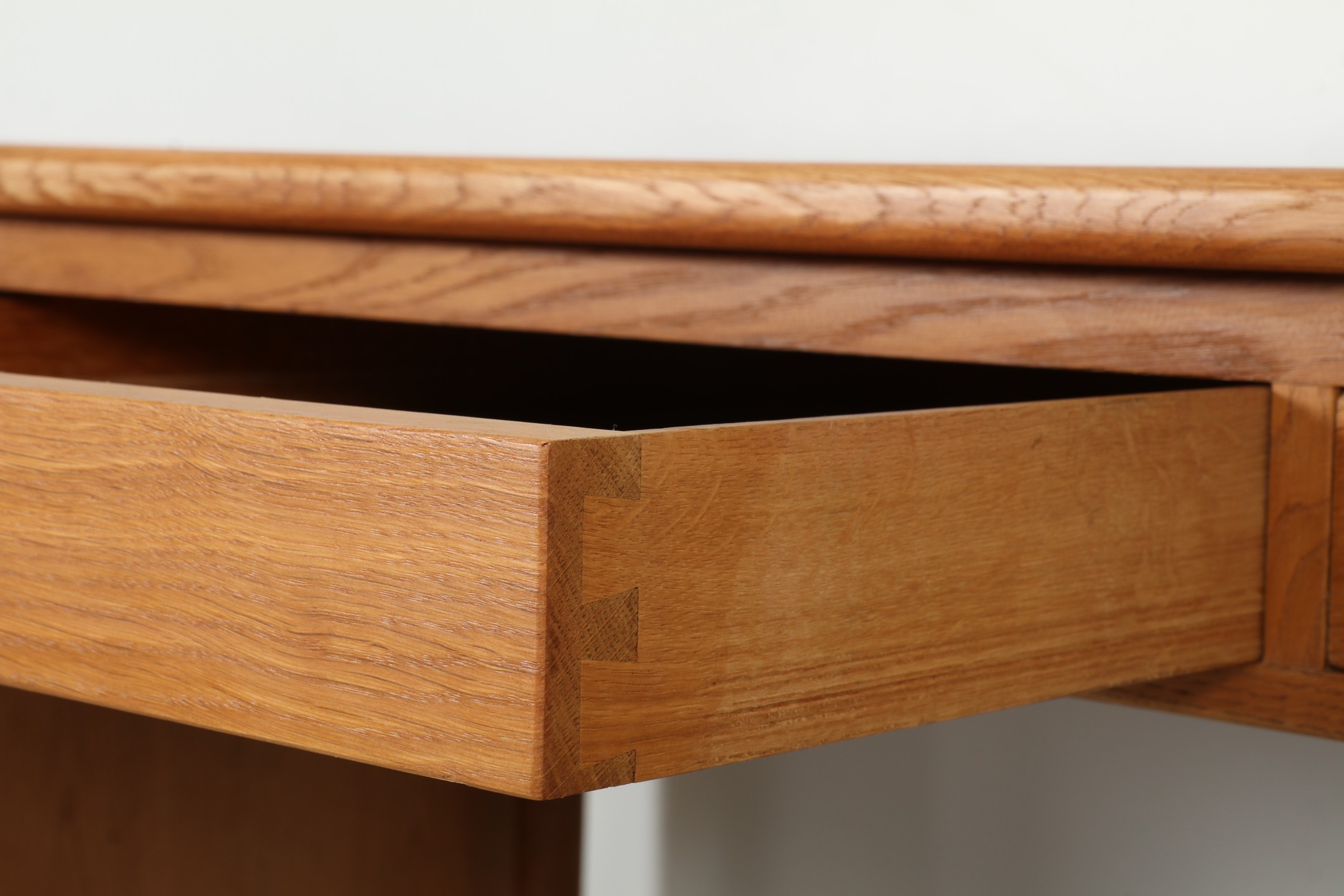
Drawer joinery on the AT-305 desk. Fit, condition and the way components work together are more informative than a checklist of prestigious materials. Image: Mr Bigglesworthy.

Assessing a dining chair during restoration. Understanding the frame and its condition helps determine what work is appropriate. Image: Mr Bigglesworthy.
An online buyer’s checklist
When buying online, request clear photographs of the underside, back, labels, drawer interiors and any damage. A well-lit overall photograph is useful, but detailed images help explain what you are buying.
Frequently asked questions
Is unmarked mid-century furniture valuable?
It can be. Quality, design, rarity and demand all matter. However, a premium based on a particular designer should be supported by evidence, not visual resemblance alone.
Does “Made in Denmark” guarantee quality?
No. Mid-century furniture was made at different price points, including in Denmark. Examine the construction and condition of the individual piece rather than treating its country of origin as a guarantee.
Can restoration reduce a piece’s value?
It depends on the piece and the work. Sensitive restoration can improve usability and desirability; removing significant original features, patina, or making inappropriate alterations can reduce collector interest.
How can you date an unmarked piece?
Compare its dimensions, construction, hardware and materials with dated catalogues or documented examples. Ownership records may help. Where evidence is limited, an approximate period is more honest than an exact year.
Choose a piece you understand and want to live with
The reward of learning to look closely is a more considered purchase. You begin to recognise the decisions behind a piece: how a drawer is fitted, how timber is selected and how a design makes everyday use feel effortless.
Explore our vintage furniture collection and designer and maker profiles, or read why mid-century modern furniture remains so popular for more on living with these designs.
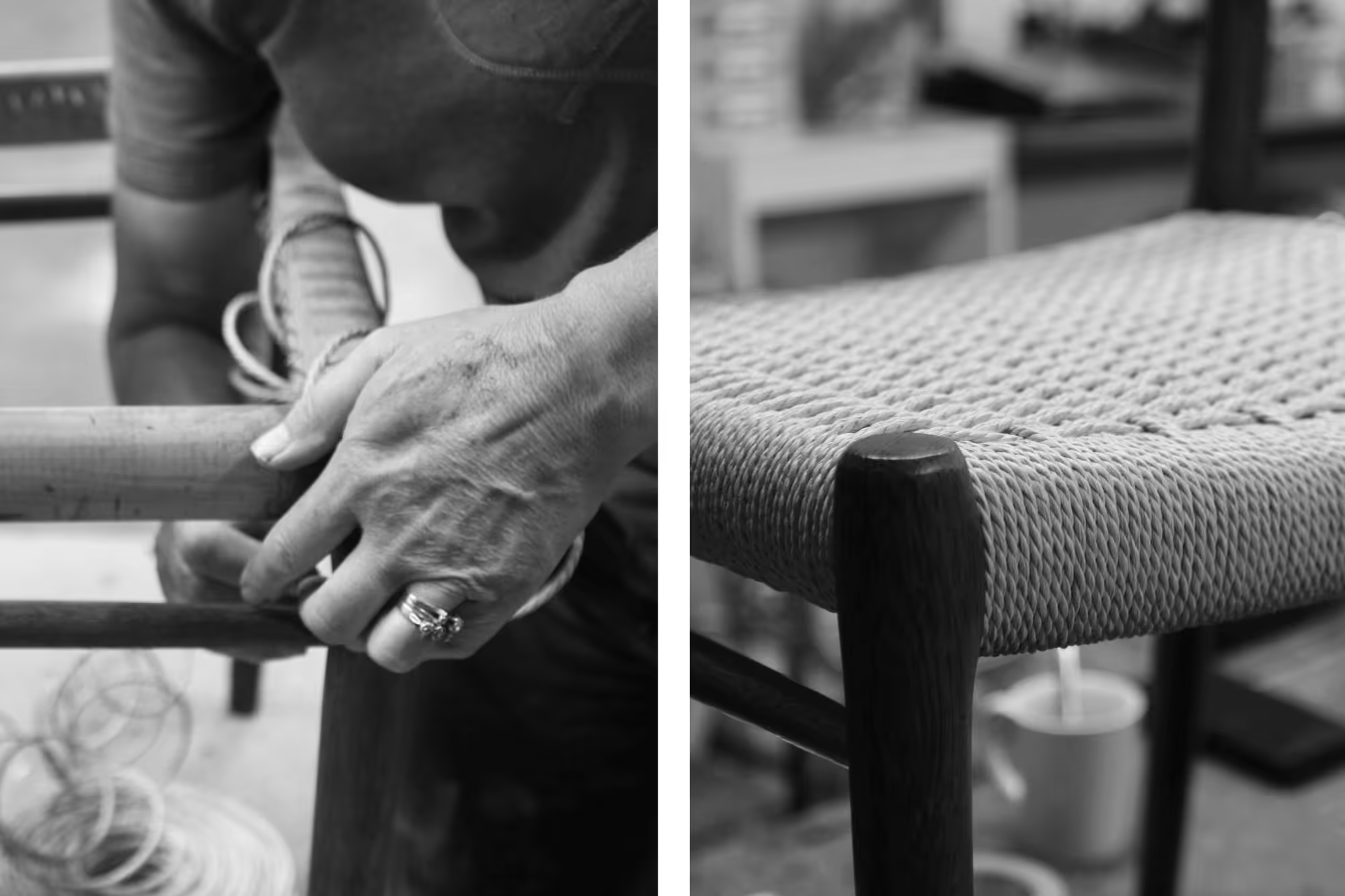
Renewing a woven chair seat. Suitable materials and careful workmanship help keep vintage furniture useful. Image: Mr Bigglesworthy.
The ability to care for and restore a piece is an important part of its long-term value.
.avif)
.webp)