Why is Mid-Century Modern Furniture so Popular?

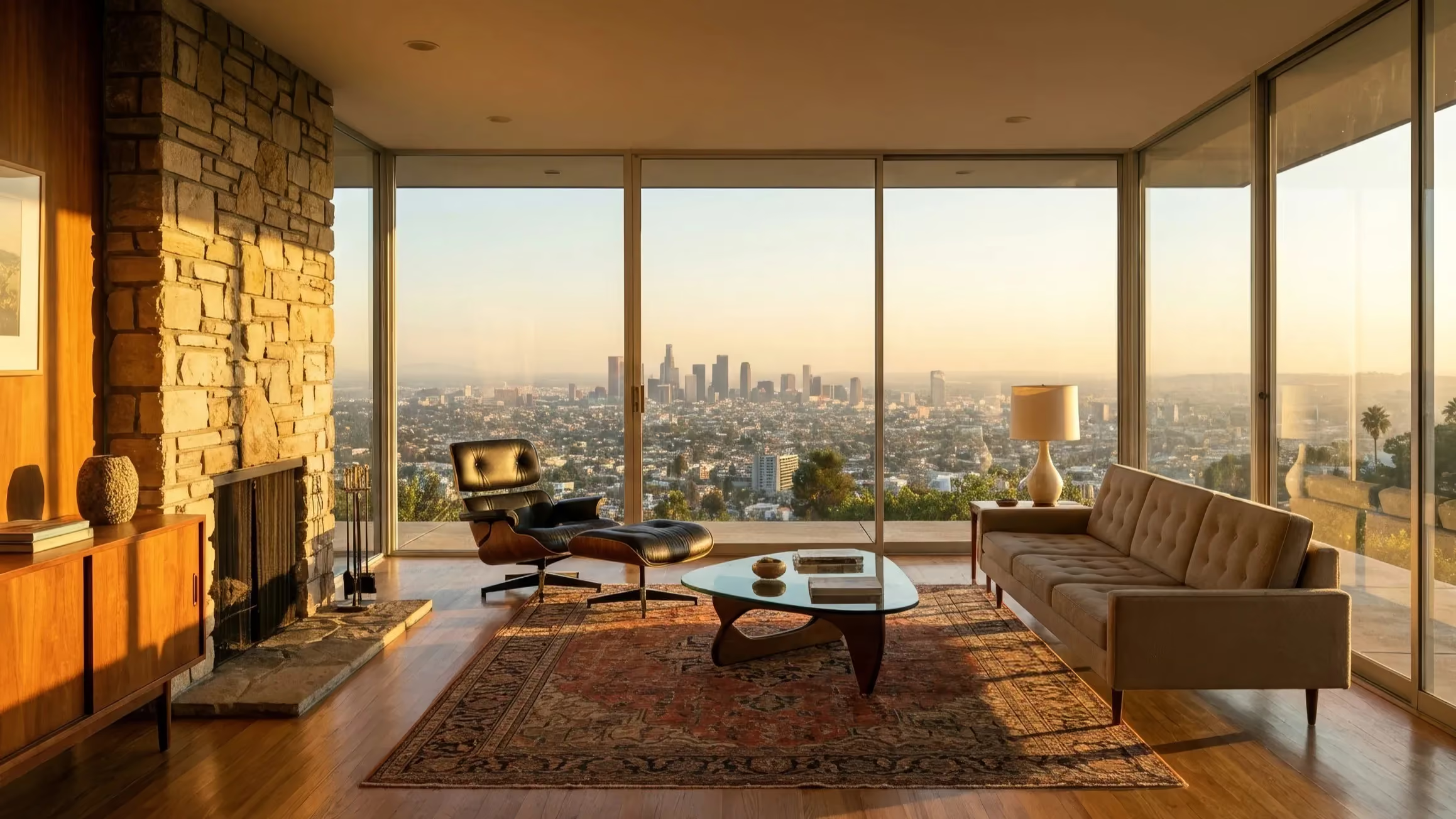
A mid-century architectural home with expansive views over the city.
The Short Answer
Mid-century modern furniture remains popular because it combines visual clarity, natural materials and everyday usefulness. The best pieces feel distinctive without dominating a room, and their proportions and craftsmanship allow them to remain relevant long after fashions change.
At Mr Bigglesworthy, we’ve seen mid-century furniture appeal to several generations of buyers. Some are interested in the designers and the history behind a piece; others simply respond to furniture that is beautifully proportioned, practical and easy to live with. What keeps it relevant, in our experience, is that these qualities become more apparent over time: well-crafted timber develops character as it ages, while thoughtful design continues to work long after changing fashions have passed.
What makes furniture mid-century modern?
The term broadly describes furniture created from the mid-1940s through to the 1970s. Although the period included many different designers and national traditions, its strongest work shares a recognisable attitude: ornament is restrained, materials are allowed to speak for themselves, and every line has a purpose.
Rather than separating appearance from function, mid-century designers treated the two as part of the same problem. A chair should support the body comfortably; a table should be stable without looking heavy; and storage should organise a room without overwhelming it. That discipline is one reason the furniture still feels convincing today.
.webp)
Lounge / Dining spaces intersected by the stone wall – Vladimir Cacala, Tapper House (1957). Mid-century furniture by Adrian Pearsall and Robin Day.
Photo / Dan and Emma Eagle
Why do clean lines make such a difference?
Clean lines are often described as a visual style, but their effect is also spatial. Slender frames, raised legs and carefully controlled proportions allow light and floor space to remain visible around a piece. The result is furniture that gives a room structure without making it feel crowded.
This restraint also makes mid-century furniture unusually adaptable. A simple timber cabinet can sit comfortably alongside contemporary art, inherited objects or more decorative furnishings because it provides a calm foundation rather than competing for attention.
Mid-century sideboards are among the most consistently popular pieces we see at Mr Bigglesworthy. Their appeal goes beyond clean lines and beautiful timber grain: they provide generous, practical storage without adding visual weight to a room. Raised legs create a sense of space, while the broad top offers a natural place to display art, ceramics or lighting. In our experience, that balance between concealing everyday clutter and presenting objects with care is what makes a good sideboard so useful.
Why do organic shapes still feel contemporary?
Mid-century modernism was never limited to straight lines. Many designers balanced precise structures with curved armrests, tapered edges and sculptural forms inspired by the body and the natural world. Those softer elements keep the furniture from feeling clinical and make it easier to live with.
The contrast is often what gives a piece its presence: a disciplined frame may support a gently curved seat, or a geometric cabinet may be softened by rounded handles and shaped legs. These details reward closer attention without relying on applied decoration.
.webp)
Dining Room, Tapper House (1957) by Vlad Cacala. Featuring a mid-century sideboard by Clausen & Son, dining chairs by Erik Buch, librenza by Victor Wilkins.
Photo / Dan and Emma Eagle

An eclectic mid-century interior featuring the iconic Charles & Ray Eames Lounge Chair and Ottoman by Herman Miller.
Why do natural materials matter?
Teak, walnut, oak, leather and wool bring warmth to otherwise restrained forms. In well-designed furniture, these materials are not simply a surface treatment. The direction of the grain, the way an edge is shaped and the junction between two materials are part of the design itself.
Natural materials also change with use. Timber develops variation and depth, leather softens, and small traces of age become part of a piece’s history. That capacity to acquire character—rather than merely appearing worn—helps explain why well-made vintage furniture can feel more personal over time.
Often, we find mid-century designs like an iconic authentic Eames lounge chair can take years for the leather to become soft and supple and the plywood shells to develop a warm patina, it takes time to develop and pieces that are 20 or more years old have an enduring presence that will elevate a room. It’s a rewarding process.
Does mid-century modern furniture have to be colourful?
No. Mustard, olive, orange and deep blue are closely associated with the period, but colour was only one part of a broader design language. Many important interiors relied on warm timber, neutral upholstery and a limited number of stronger accents.
This makes the style easier to use than its more nostalgic interpretations suggest. A single upholstered chair, artwork or ceramic object can introduce colour, while timber furniture provides continuity across the room. The objective is not to recreate a period set, but to use colour with enough restraint that the furniture and the surrounding space remain balanced.

A renovated Victorian era home featuring eclectic mid century furniture including the Pernilla Lounge Chair by Bruno Mathsson.
Photo / Bruce Hemming, The Observer
Form and function were never separate
The mid-century period’s most memorable furniture often emerged from practical questions: how to create comfort with less bulk, how to make a table appear lighter, or how to provide generous storage within a disciplined form. Designers experimented with construction and manufacturing, but innovation was most successful when it improved the experience of using the piece.
That emphasis distinguishes enduring design from novelty. A chair may be sculptural, but it still has to support the body. A sideboard may be beautifully resolved, but its doors, drawers and shelves must work easily. When usefulness is embedded in the form, the furniture remains relevant even as the room around it changes.
Why does mid-century furniture work in New Zealand homes?
The visual lightness of mid-century furniture suits homes where living, dining and kitchen areas share a single space. Raised forms preserve sightlines, while natural timber responds well to daylight and creates warmth against simpler architectural finishes. The scale of many pieces also allows them to define an area without enclosing it.
It can also bridge different periods of architecture. A restrained chair or sideboard may feel equally at home in a mid-century house, a renovated villa or a contemporary apartment because its character comes from proportion and material rather than decorative styling.
We have been fortunate enough to deliver mid-century furniture to many New Zealand homes, from apartments to villas to large contemporary homes, in every scenario a well-placed, appropriately scaled mid-century piece will elevate the interior. The warmth and character of vintage design always adds depth and history and the materials add a warmth or bold feature depending on preference.
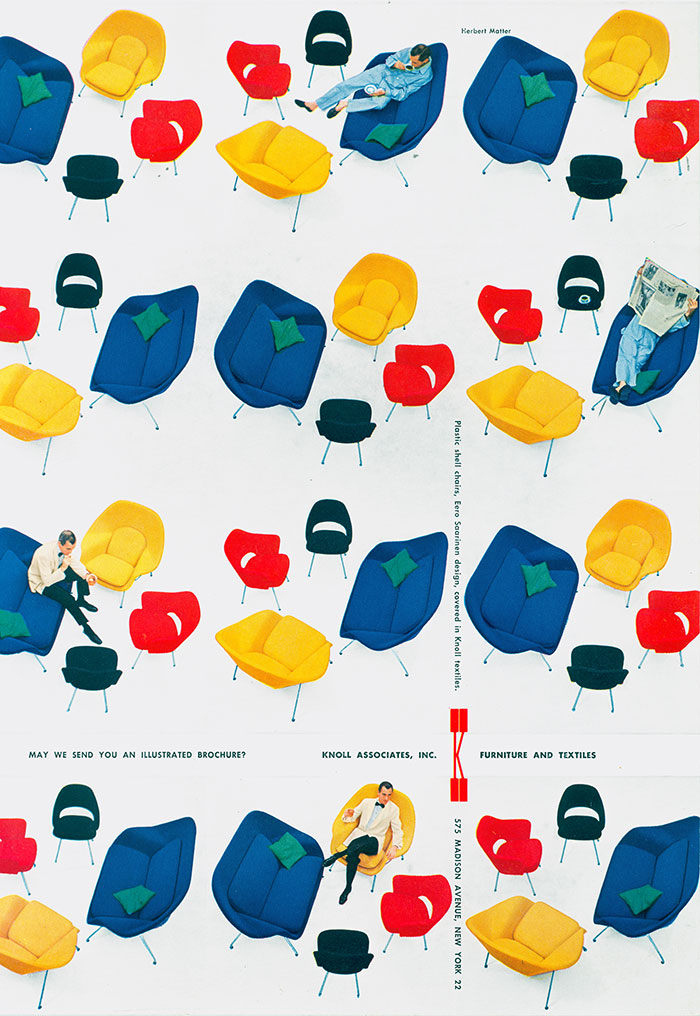
A vintage 1950s advert by Herbert Matter for Knoll featuring designer furniture by Eero Saarinen.
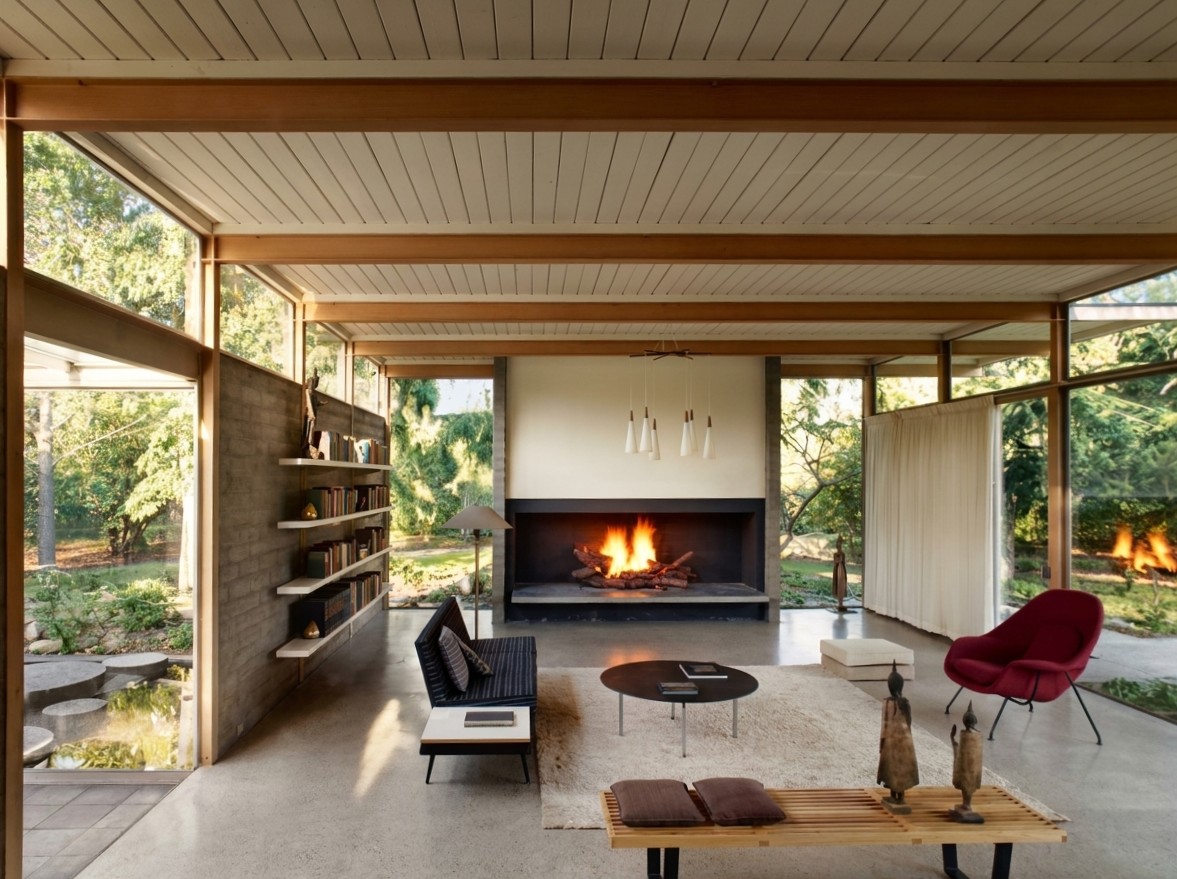
Mid-Century 'Hilmer Residence' by Architect Don Knorr showcased in Architectural Record Houses of 1958
Featuring iconic Florence Knoll and Eero Saarinen furniture from Knoll alongside a George Nelson Bench by Herman Miller
How do you choose a mid-century piece that will last?
A well-known designer or maker can add historical interest and value, but a recognisable name is not the only measure of quality. Begin with the relationship between the piece, the room and the way it will be used. Then examine the details that will matter after the initial impression has passed.
· Proportion: Does the piece feel balanced from several angles, and is its scale appropriate for the intended space?
· Construction: Look at how frames, legs, doors and drawers meet. Good construction should support both the appearance and the function of the piece.
· Condition: Distinguish between appealing signs of age and damage that affects stability, comfort or future use. Any restoration should respect the original design and materials.
· Usefulness: The right piece should solve a real need. Comfort, storage and ease of use are part of its design value, not secondary considerations.
When we select pieces to represent Mr Bigglesworthy we always try and factor in the quality of the construction. Mid-century pieces were sold at several price points and even Danish pieces can occasionally be low quality. As we usually restore items before selling we need to know that this is possible and that we can get a good outcome. This is important if you want your item to be a family heirloom as over time being able to conserve and restore is an important part of caring for it. Cheaper items often age in a way that isn’t attractive and is difficult to care for and restore.
The enduring appeal
Mid-century modern furniture remains popular because its strongest ideas are still useful: clarity without coldness, craftsmanship without excess, and character without unnecessary decoration. It can anchor an interior while leaving space for art, architecture and the objects that make a home personal.
Its history gives each piece context, but history alone is not enough. The furniture endures when thoughtful proportions, honest materials and practical function continue to improve everyday life. That is why the best mid-century design feels less like a passing revival and more like a lasting part of the contemporary home.

Mr. Bigglesworthy gallery featuring an Adrian Pearsall Platform Sofa and artwork from Foenander Gallery
Photo / Foenander Gallery
.avif)
.webp)