Heavy Modern: Furniture with Weight, Warmth and Presence
This pair of Esko Pajamies’ Bonanza armchairs for Asko arrived in our recent container of Danish and Scandinavian vintage furniture. Broad oak frames, oversized arms, generous leather cushions: everything about them invited a closer look. They also looked as though they could anchor an entire room.
This sent us down a research rabbit hole. We are used to talking about the lightness of Scandinavian design, but these chairs opened up another side of the story. One phrase seemed especially useful: heavy modern.
Here, we use it as a description rather than a formal design movement: furniture with visual weight, expressive materials and enough presence to give a room its centre of gravity.
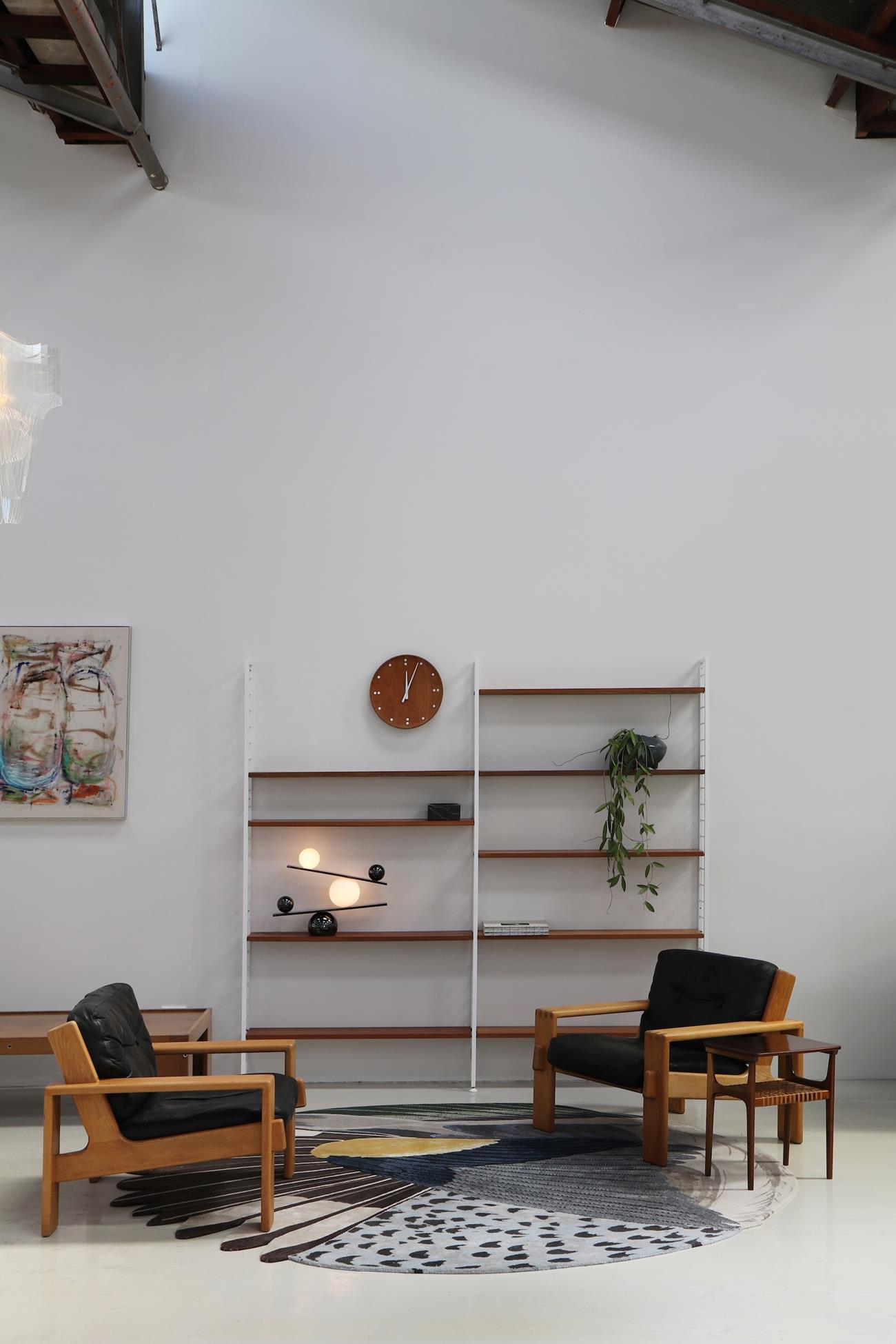
Esko Pajamies’ Bonanza armchairs in the gallery, with Ladderax shelving and the Feathers rug by Maarten De Ceulaer from Good Form. Artwork by Antoine de Pins, courtesy of Föenander Galleries. Image supplied through Mr Bigglesworthy.
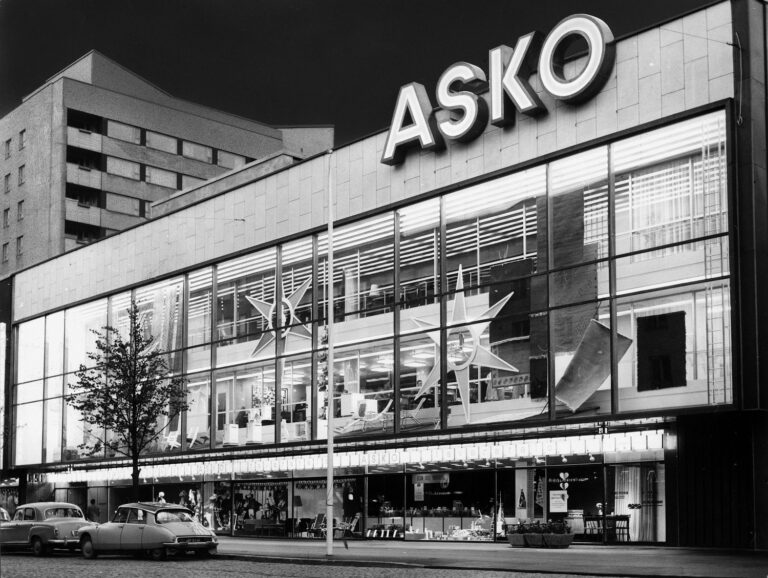
An Asko storefront c1950s, with furniture displayed behind its broad glazed façade.
The chairs that started the story
Designed by Finnish interior architect Esko Pajamies (1931–1990), Bonanza entered Asko’s range around 1968. The collection included armchairs, sofas and tables, bringing its broad timber frames into everyday living rooms.
The period photograph brings the collection to life. Red upholstery, pale timber and a simple rug create an inviting place to gather. The Asko storefront offers a glimpse of the world in which furniture like this reached its first owners.
Our 1970 pair combined solid oak and original black leather. Look closely and the construction becomes part of the pleasure. Wide rails trace the chair’s outline; cushions nest inside the frame; the arms give it a generous stance.
There is something reassuring about a chair whose construction you can read at a glance. Bonanza has that clarity, along with the promise of somewhere comfortable to spend an evening.
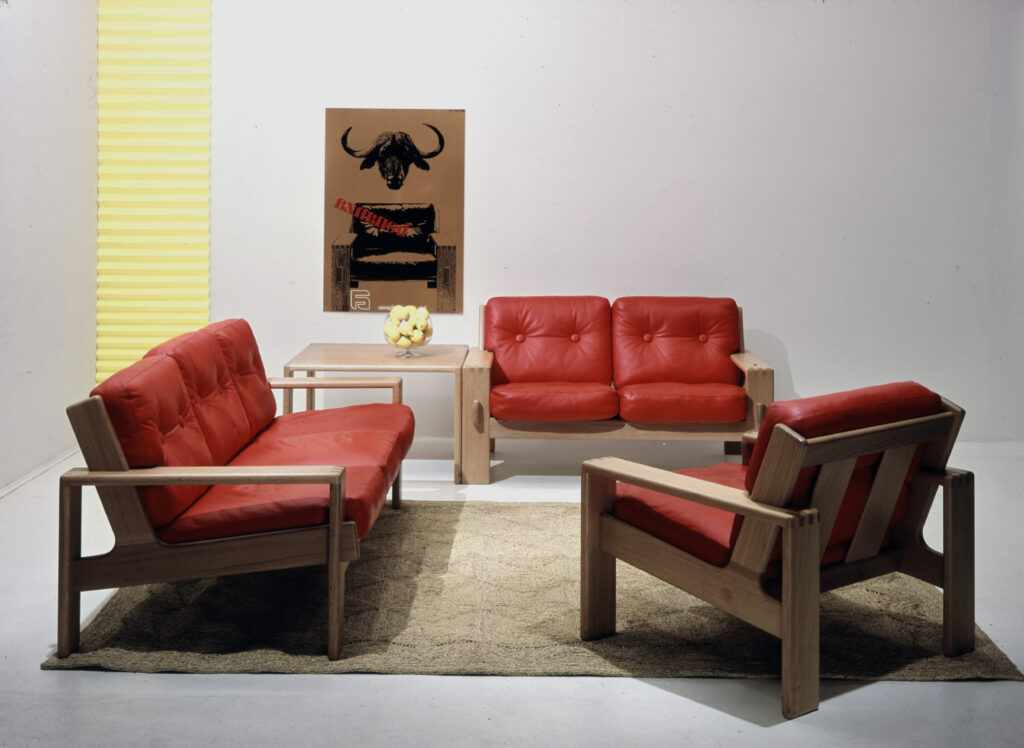
Bonanza in a period interior: red cushions and broad timber frames arranged around a low table. Designed by Esko Pajamies for Asko.
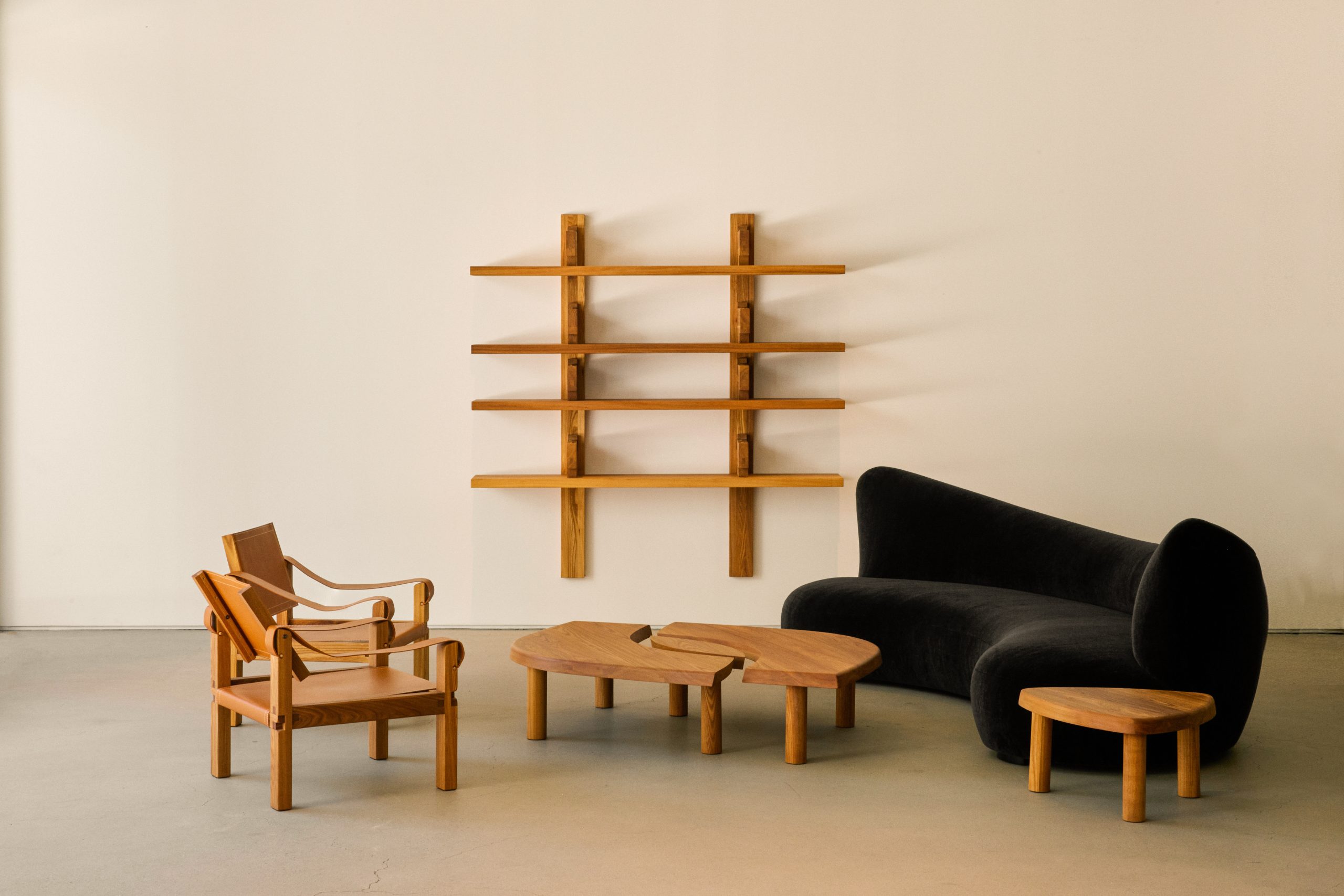
Pierre Chapo’s T22 table, designed in 1972, anchors a contemporary seating arrangement. Image: Chapo Création.
What makes furniture feel ‘heavy modern’?
Start with the silhouette. Low seats, deep cushions, thick timber sections and broad surfaces give these pieces a grounded quality. A frame, joint or leather strap can be as visually important as the upholstery it supports.
This substantial approach became especially visible in the late 1960s and 1970s. It offers a useful connection between otherwise very different pieces of Scandinavian, French, Italian and South American furniture.
The connection is mass, texture and visible construction. Imagine the grain running across a thick tabletop, or the way a leather cushion softens against a rigid oak frame. Much of the appeal lies in that meeting of materials.
There is an overlap with Brutalism in the strong geometry and exposed structure. But ‘heavy modern’ leaves room for polished timber, rounded upholstery and considerable softness. It describes a presence you can recognise without requiring every piece to belong to the same school.
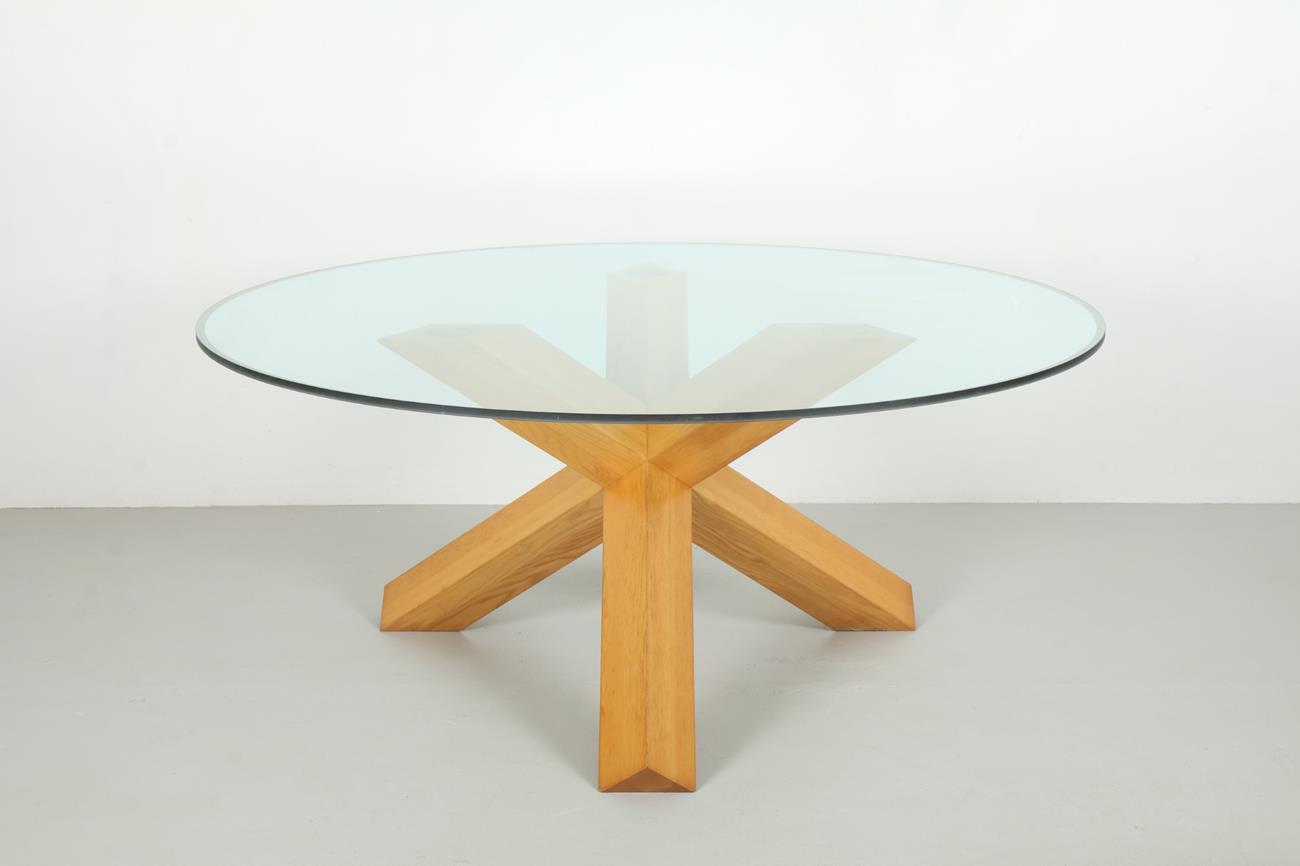
Archive / La Rotonda by Mario Bellini for Cassina. The glass top leaves the intersecting timber base in full view.
Different designs, a shared sense of presence
French designer Pierre Chapo gave solid timber and joinery a commanding role in his furniture. Charlotte Perriand’s mountain interiors offer a related pleasure: substantial wood that feels closely connected to its surroundings.
Italian designers explored equally expressive forms. Mario Bellini and Afra and Tobia Scarpa are particularly interesting here, because their work shows how much character can come from the structure of a piece.
Two tables from our archive make the point. Bellini’s La Rotonda dining table places a glass top above a substantial solid-ash base. Your eye goes straight through to the intersecting timber beneath.
The Scarpas’ Model 771 coffee table for Cassina holds its ground through low proportions, broad walnut planes and precise edges. The broad top gives the grain of the walnut room to be seen.
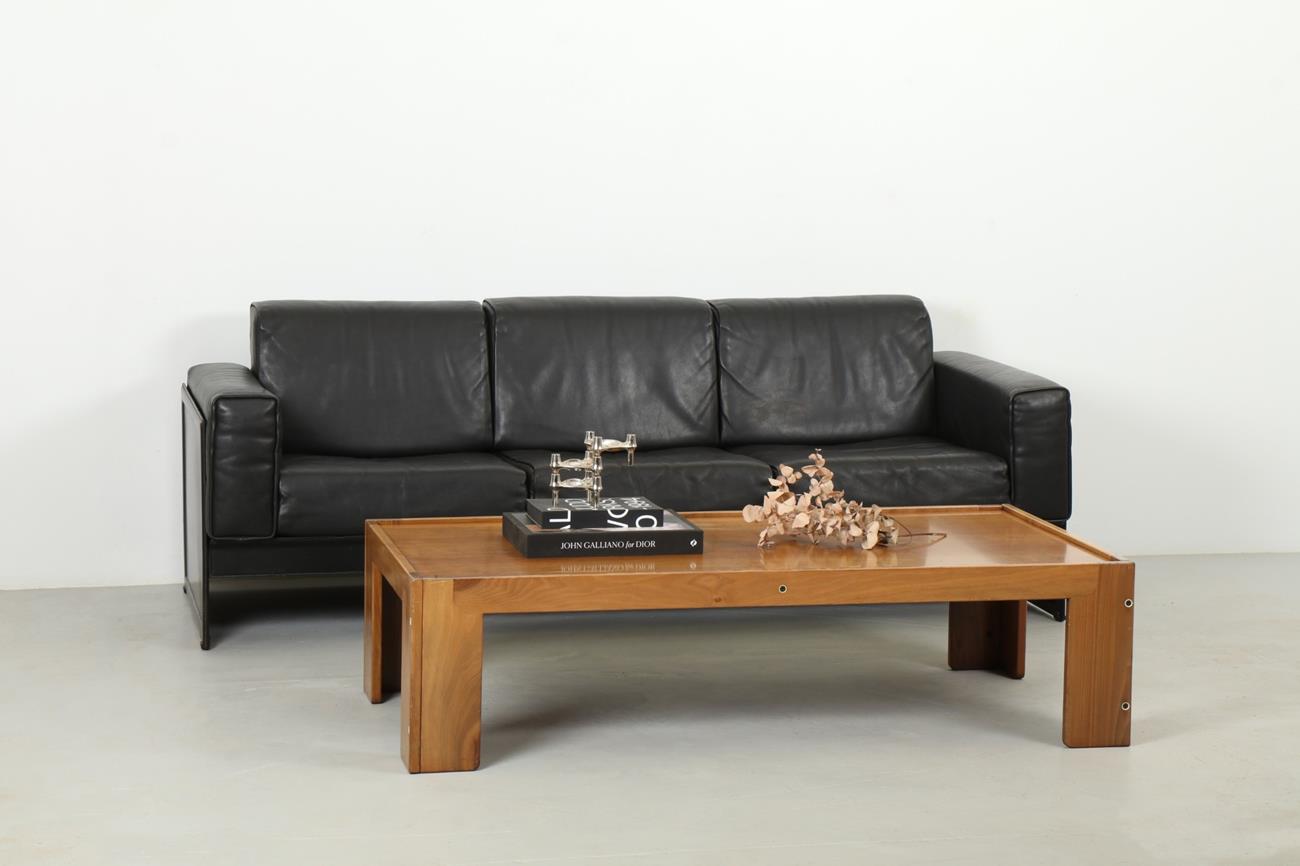
Archive / Afra and Tobia Scarpa’s Model 771 coffee table for Cassina, with its low proportions and broad walnut surfaces.

De Sede’s DS-600, launched in 1972. Linked upholstered sections turn the sofa into a winding landscape of leather.
Timber, texture and a softer kind of weight
A sofa that snakes out of a building and into a delivery truck is quite a statement of intent. Swiss maker de Sede launched the DS-600 in 1972, with linked upholstered elements that can form long, sweeping curves. Its low profile, deep leather upholstery and repeated sections give it a remarkable physical presence: a continuous landscape of seating that can shape the space around it.
Chapo’s T22 table, designed in 1972, makes its impression through timber. Two shaped sections can sit together or apart, giving the composition room to change. The close-up shows how much interest comes from the thickness of the top, its curved outline and the grain across its surface.
These pieces need very little embellishment. Their character is already there in the material and the way it has been handled. That is also part of the pleasure of buying vintage. Leather softens with use; timber develops variation in colour; the surfaces acquire traces of everyday life. Those details give a piece individuality.
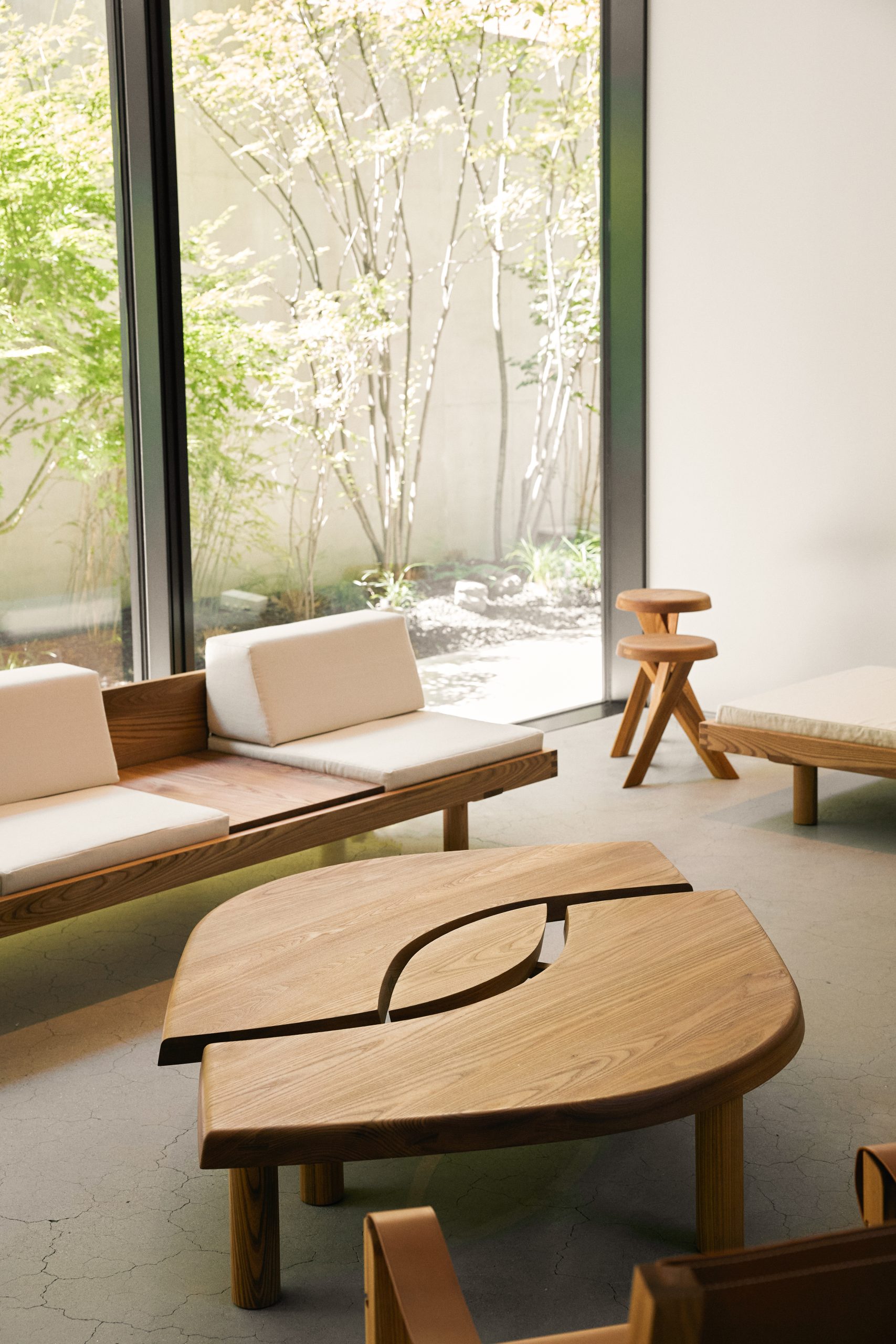
The T22’s shaped timber sections bring grain, thickness and geometry into focus. Contemporary photography. Image: Chapo Création.
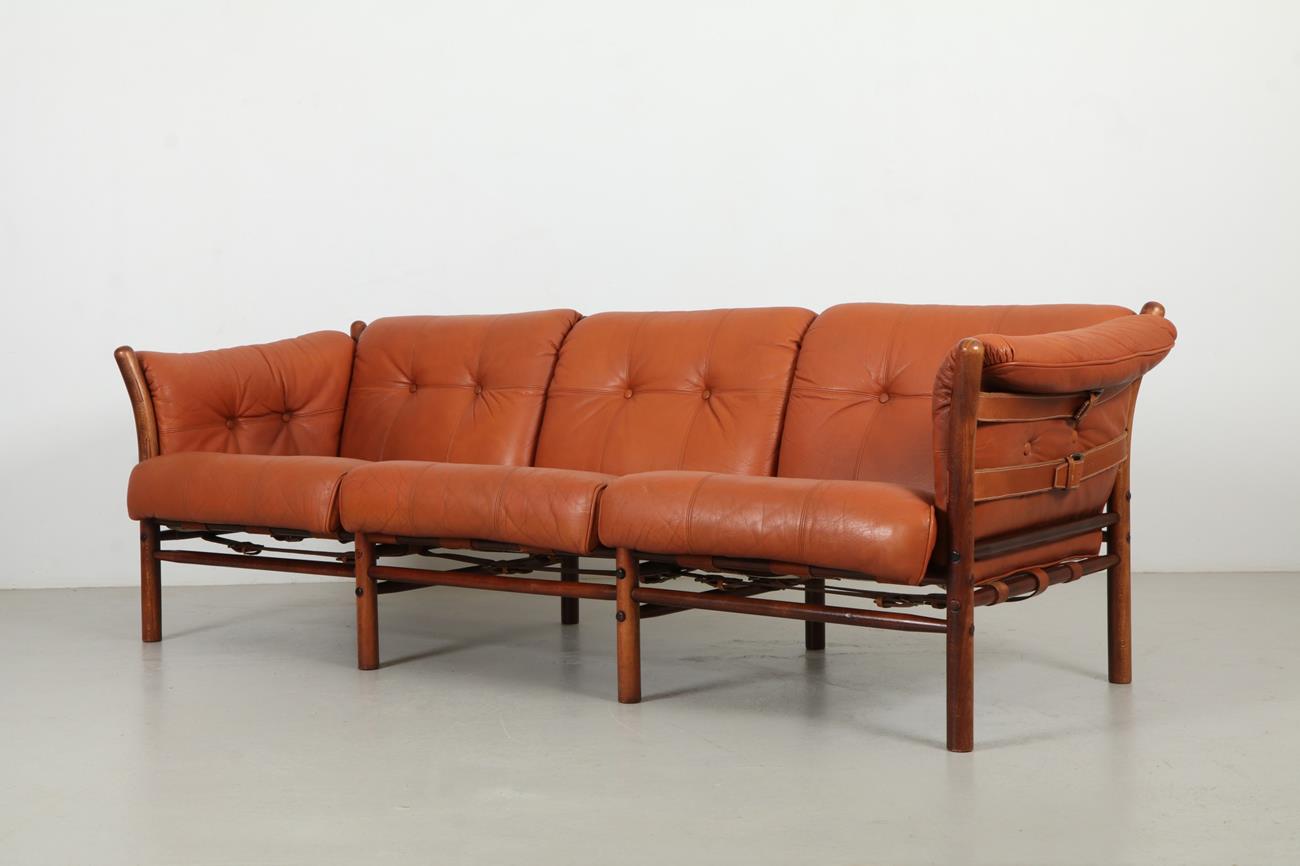
Archive / Arne Norell’s Indra sofa: tan leather, buttoned cushions and an exposed timber frame.
Give a substantial piece room to breathe
Arne Norell’s Indra sofa is a good reminder that substantial furniture can feel wonderfully relaxed. Its curved beech frame, visible straps and deeply buttoned leather cushions put structure and comfort in the same picture. In a contemporary home, that combination can be especially useful. Against white walls, concrete or large panes of glass, timber and leather introduce texture at a scale you can feel across the room.
Start with one strong piece. A broad-framed armchair beside a slender floor lamp. A substantial timber table surrounded by lighter chairs. A deep leather sofa with space around its arms and back. Give the outline room to be seen. If a piece has beautiful joints or an expressive rear frame, consider a position where those details are visible. Let the rest of the room provide some breathing space.
A different side of modernism
The Bonanza chairs reminded us how much there is to discover beyond the familiar picture of mid-century design. Generous upholstery, architectural timber and bold proportions belong to that history too.
More than half a century later, their appeal is easy to understand. They look reassuring, feel inviting and bring their own character to a room. That is what draws us to heavy modern: furniture with the presence to shape a room, and the warmth to make you want to stay.

.avif)
.webp)