Jon Jansen : A Design Store Legacy

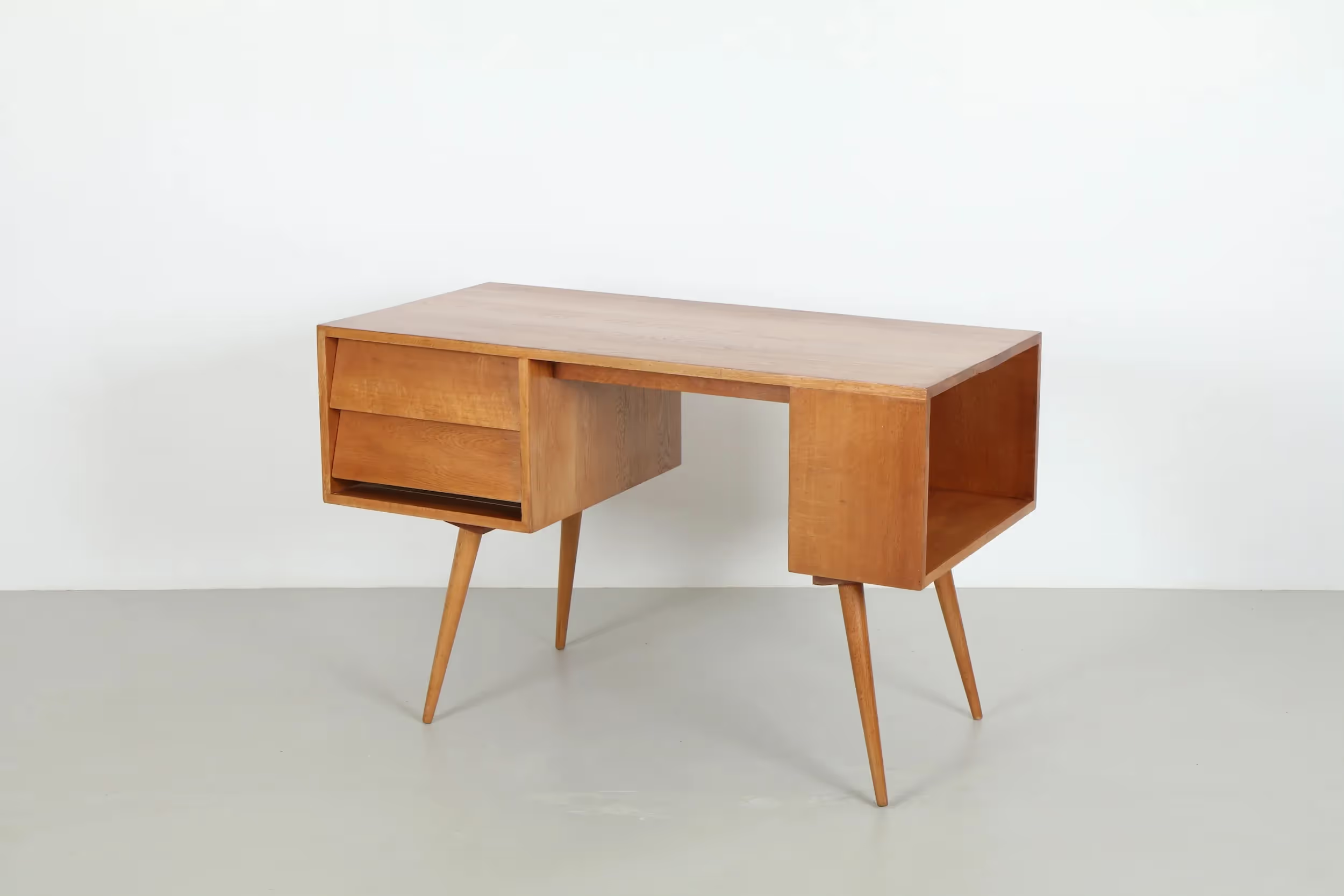
A rare desk by Edzer (Bob) Roukema. Held in the collection of Auckland Museum.
We can’t remember a moment when the gallery didn’t have a piece by Jon Jansen on display. Recent acquisitions of rare designs by this New Zealand maker and retailer have prompted us to share a brief slice of its design history.
Opened in 1951, Jon Jansen was a fictional name, evoking European sophistication. With just 12 years in retail and 21 years as a manufacturer, it made a lasting impact on New Zealand design and introduced post-war Aucklanders to local and international modernist designers who were shaping a new interior style.
Evern though we can be confident that there were thousands of furniture pieces produced by Jon Jansen, published history is rare to find. Founder Lincoln Laidlaw (1921 - 2014) is only mentioned in Wikipedia as part of his father’s page, Robert Laidlaw, who established New Zealand’s iconic department store, Farmers Trading Company.
With his exposure to business it’s unsurprising that Lincoln Laidlaw established his own, starting in toy manufacture – Lincoln Industries which became Lincoln International, names which appear on early Jon Jansen labels. There was also a latent passion for modern designer furniture which he developed on the side.
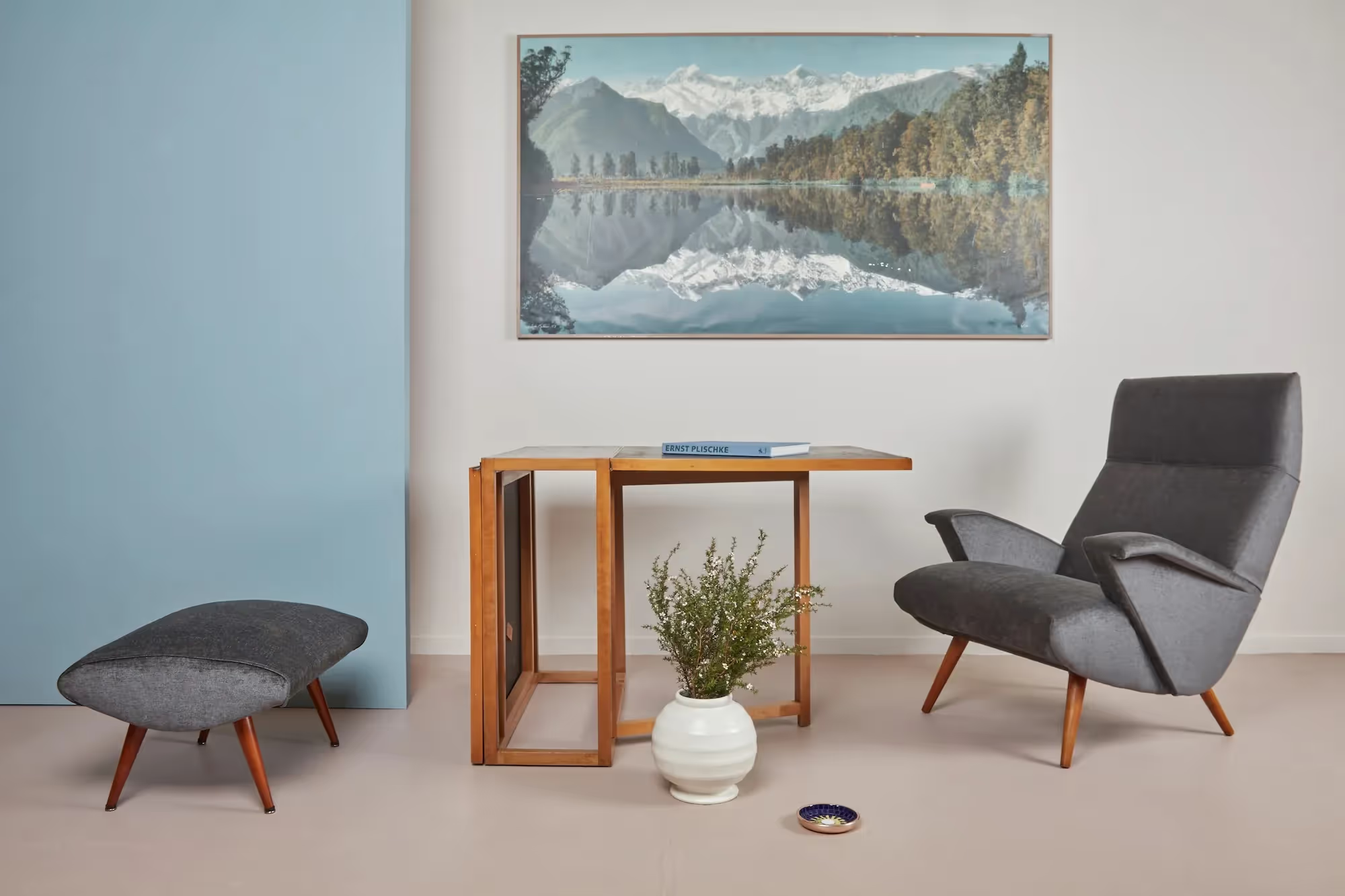
Armchair and Ottoman by Edzer (Bob) Roukema, 1950s. Recently shown at Objectspace 'The Chair' and held in the collection of Te Papa Tongarewa.
In 1951 the expansion his business into a larger factory was a key moment as the space contained “a range of abandoned wood working machinery giving Laidlaw the opportunity to realise his furniture ambitions”. Experimenting with production of imported designs in the larger factory at 102 Great South Road, Laidlaw was able to bring his furniture dream to life. However, the conservative Auckland retailers didn’t open their doors to the brave new furniture designs and Laidlaw was forced to open his own store.
In 1951 Jon Jansen was opened in a small shop in Queens Arcade with a minimal interior and products. It was an avante garde space with a black and white fitout, presenting more of a gallery look. As it happened, Laidlaw couldn’t run everything and Edzer (Bob) Roukema (1920 – 1964) entered the picture. Originally from the Netherlands, Roukema was a pivotal figure in the Jon Jansen story. It seemed like there was nothing he didn’t do – hired as both designer and store manager he was also credited with the fitout of the retail space.
Fortunately the store found a following and the niche audience it needed and took the opportunity to expand to 223 Symonds Street where it had more floor space and a new store manager, another Dutch migrant named Jon Kohl. The new retail space was a destination where customers could access international designs being introduced by Laidlaw, who was able to source products while travelling for his toy business. Noted in advertising of the time, the international lineup included pieces by Ernest Race, Howard Keith, Douglas Snelling and Ostrum.
.avif)
Jon Jansen advertising from the 1950s. Home and Building.
.avif)
Contour Armchairs by Edzer (Bob) Roukema, 1950s.
After a year spread thin, running the back and front of house, Roukema dropped out of the store operations to focus on design. While the international designs were sought after, the work produced by Bob Roukema is equally impressive. Collectable examples of his work continue to be relevant to a contemporary audience and two chairs have recently been exhibited at Objectspace ‘The Chair’ (2024/25) which are also included in the collection of Te Papa Tongarewa.
Roukema was confident and innovative, capable of designing for the home or a commercial environment. Informed by his education, experience and international directions he developed dozens of imaginative, fresh pieces which felt cohesive and suited the New Zealand lifestyle with local timbers. He easily became a favourite of key local architects who referred a lot of work to him and gave Jon Jansen representation in design and architecture publications of the time ‘Home and Building’ and ‘Design Review’.
Other high calibre local designers were represented at Jon Jansen too. Broadhead Bros, manufacturing Fler Furniture, John Crichton lighting, along with the architects who comprised Brenner Associates – Desmond Mullen, Steve Jelicich, Vladimir Cacala, Milan Mrkusich. Vladimir Cacala is also noted as a furniture design contributor to the store.
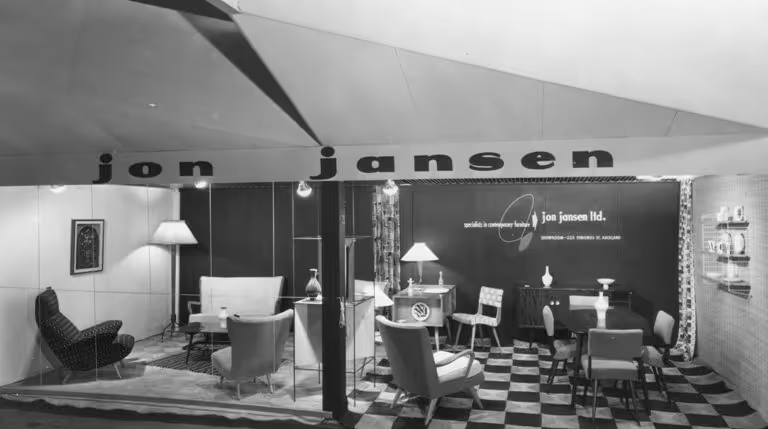
Jon Jansen furniture pavilion Easter Show 1955, Sparrow Industrial Pictures Collection at the Auckland War Memorial Museum
By the late 1950s Lincoln Laidlaw’s toy business became hugely successful with export connections to 26 countries and offices in London, New York, and Sydney as well as New Zealand. With this much activity Laidlaw was not able to put much attention towards Jon Jansen and the retail aspect failed after Bob Roukema and Jon Kohl left in 1959. Without Roukema and Kohl, the dedication and drive for cutting edge design was dampened. The retail business closed in the mid 1960s.
The factory, now at 719 Great South Road, remained in production as a wholesale operation until 1972. The designs it represented had by that stage become widely accepted and Jon Jansen had lost its market share for modernist design to other stores like Danske Mobler, a business originally contracted to Jon Jansen for upholstery.
.avif)
Jon Jansen advertising from the 1950s featuring pieces by Douglas Snelling (Australian) and Edzer (Bob) Roukema. Home and Building.
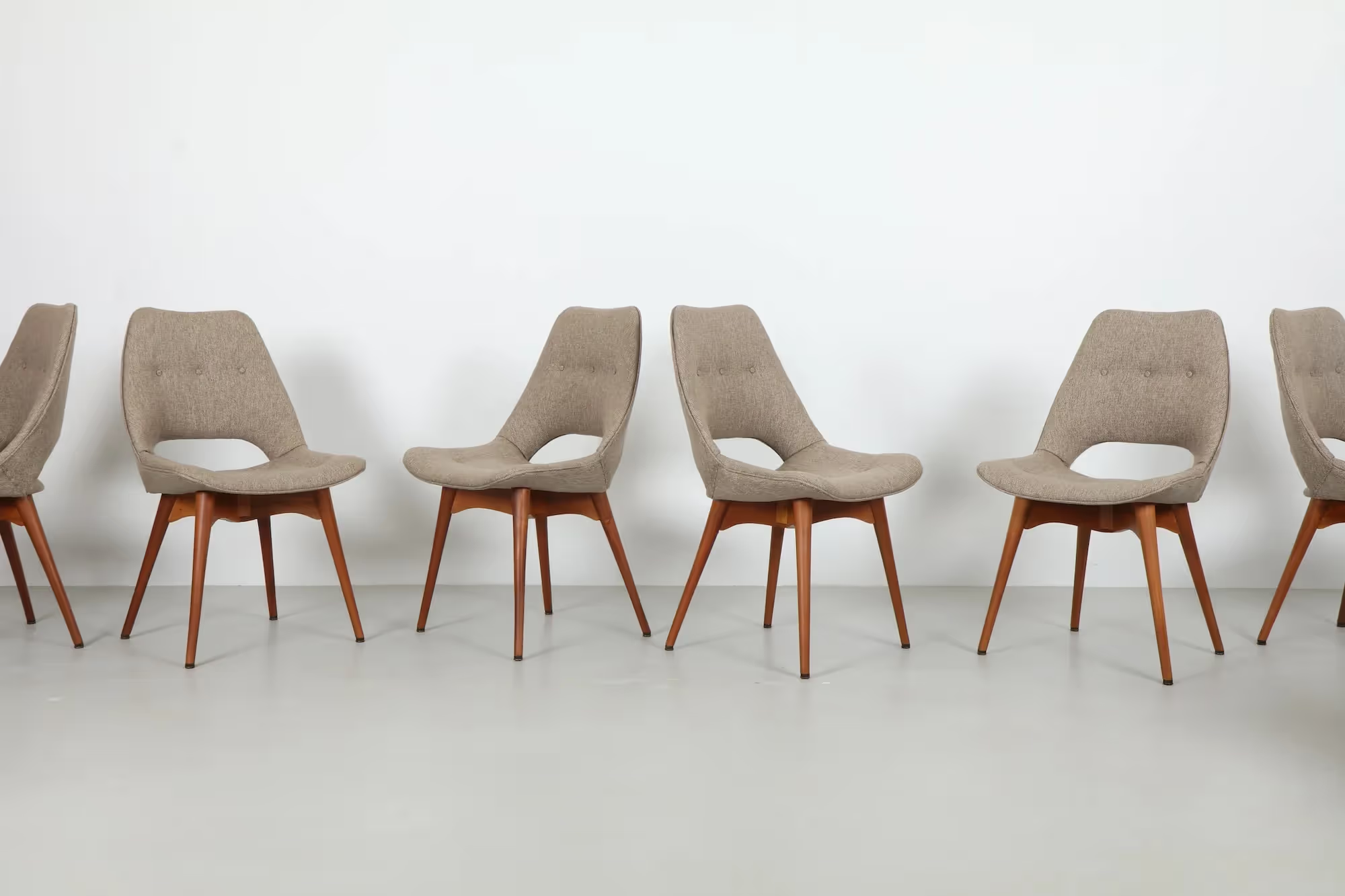
Contour Dining Chairs by Edzer (Bob) Roukema for Jon Janen, 1950s.
The history books may have forgotten Lincoln Laidlaw but his passion, curiosity and investment in design fuelled a lasting legacy. Jon Jansen was one of the stores which was integral to the shift in New Zealand towards a contemporary style. It opened doors for new designers and other stores to develop a modern way of living.
Bob Roukema, who left home at 24 and after his service in WWII, seems to have given New Zealand his best years. After leaving New Zealand he developed multiple sclerosis and passed away not long afterwards. While his name might be forgotten too, his plentiful design pieces and contribution to the Jon Jansen story remain to be celebrated.
We acknowledge the research and publication by Tanya Wilkinson – written in 1994 and subsequently included in Modern New Zealand magazine, edited by Douglas Lloyd Jenkins and published in 1995.
.avif)
Sideboard by Edzer (Bob) Roukema for Jon Jansen, 1950s.

Contour Armchair by Edzer (Bob) Roukema for Jon Jansen, 1950s.

.avif)