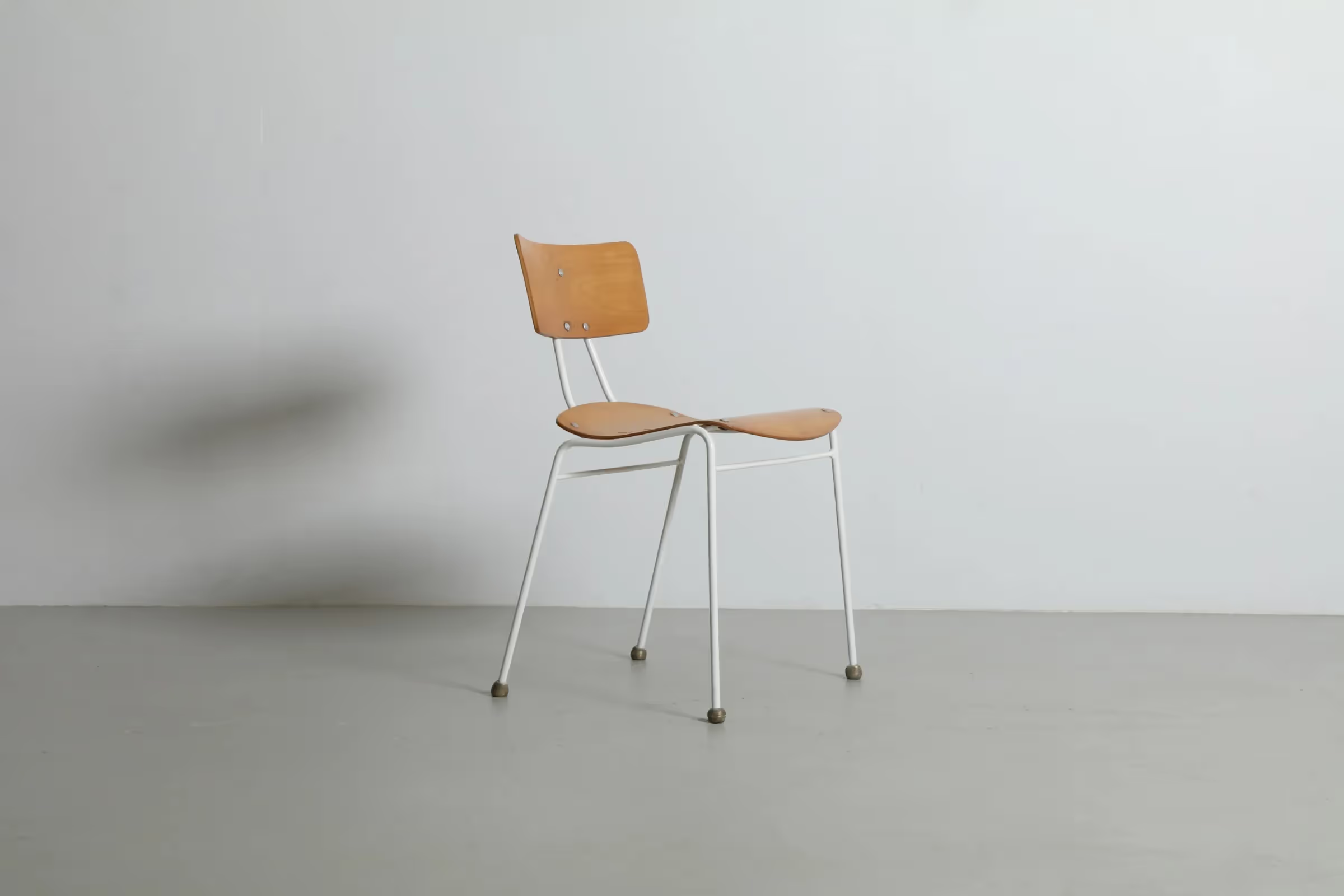
Revered Roy Lippincott 'Massey Agricultural College' Chairs
.svg)
.svg)
American Architect Roy Lippincott completed his architecture degree at Cornell University before working for several prominent ‘Chicago School’ architectural firms. His resume includes completing several of Frank Lloyd Wright’s projects after Lloyd Wright fled to Europe in 1909.
In 1921 Lippincott jointly won a design competition for the Auckland University Arts Building and worked in New Zealand on several iconic projects during the 1920s and 1930s including the Farmers Tea Rooms, a six-storey extension to Smith and Caughey department store and Massey University buildings in Palmerston North.
In keeping with the Arts and Crafts ideals of the time, Lippincott would also design the interior of each building including the furniture. These chairs were designed for the Massey University buildings and based on earlier versions designed for the Auckland University Arts Building. They are considered progressive for their lack of decorative ornamentation and use of native rimu when oak was considered fashionable.
Today Lippincott’s furniture is highly coveted and collectable. Examples can be found in the permanent collections of New Zealand’s most prominent museums including Te Papa and Auckland Museum.
Sources:
/ Andrew Barrie, “Roy Lippincott in Auckland”, Itinerary No. 28, Block: The Broadsheet of the Auckland Branch of the New Zealand Institute of Architects, No. 12, 2009.
/ The Anatomy and Physiology laboratory in the Main Building of the Massey University Palmerston North. Massey University Archives, L-8-2.3\_14 CC BY
NOTE: Price is per chair, we have two available.
Each piece is checked and carefully hand restored at our Kingsland studio workshop. Our focus is preserving the character and patina of the design while ensuring it displays beautifully in a contemporary interior...
Each piece is checked and carefully restored at our Kingsland studio workshop. Our focus is preserving the character and patina of the design while ensuring it displays beautifully in a contemporary interior.
- Joints checked and reglued
- Timber cleaned and stains removed
- Veneer repairs if needed
- Surfaces polished / refinished
Our full collection is showcased at our Eden Terrace gallery. We have parking available beside the building and would love to see you.
All pieces are available for collection in person from our Eden Terrace gallery. We are also happy to provide a quote for delivery throughout New Zealand.
Please enquire for delivery options.


Revered Roy Lippincott 'Massey Agricultural College' Chairs
GOOD FORM, 86 Newton Rd, Eden Terrace, Auckland.

American-born architect Roy Alstan Lippincott brought an unusually progressive design outlook to New Zealand in the 1920s and 1930s, creating buildings and furniture that treated architecture, interiors and everyday use as part of one complete idea.
Born in Pennsylvania in 1885, Lippincott graduated in architecture from Cornell University in 1909 and became part of the progressive Chicago architectural circle. He later worked with Walter Burley Griffin and Marion Mahony Griffin, moving to Australia in 1914. In 1921, Lippincott and Edward Billson won the competition to design Auckland University College’s new Arts Building, now the University of Auckland ClockTower, prompting Lippincott to settle in Auckland.
His furniture was conceived with the same care as his buildings. For the University, Lippincott designed an extensive collection of chairs, desks, stools and cabinets in native rimu, deliberately choosing the timber for its expressive grain. In a 1924 letter outlining the scheme, he described rimu as having a grain “at times almost theatrical in its effect.” The furniture was practical and forward-looking, with flush surfaces, restrained ornament and details shaped around durability and everyday use.
Lippincott later designed furniture for other major New Zealand projects, including Massey Agricultural College. Earlier examples created for the Auckland University Arts Building reveal a distinctive language that bridges Arts and Crafts ideals with the emerging clarity of modern design.
After returning to the United States in 1939, Lippincott continued his architectural career in California. Today, his New Zealand furniture is rare, highly collectable and represented in major institutional collections, offering a fascinating early chapter in the development of modern furniture design in this country.

.avif)